
Faded oat grass
Helictotrichon praeustum
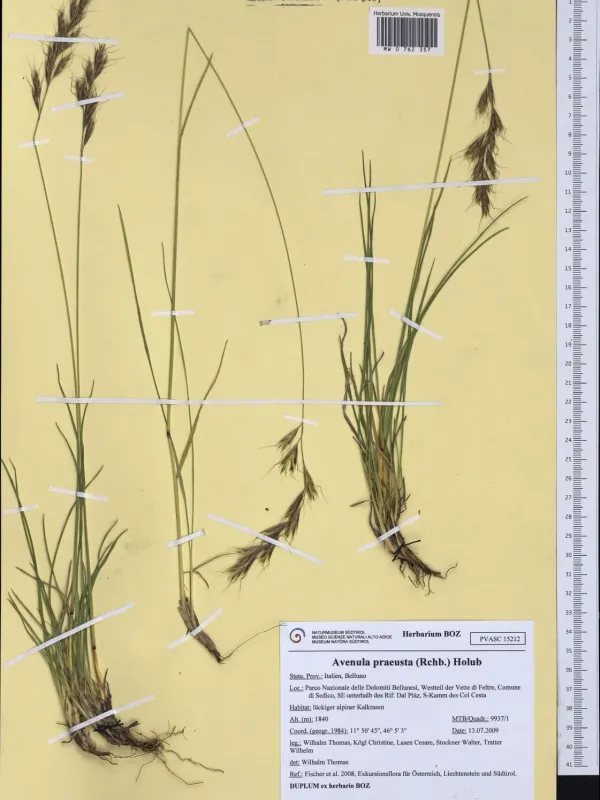
Description
Sowing dates
Seeding is best performed in early spring when moisture levels are optimal. The seeds require a stable, moist seedbed to germinate effectively, so irrigation or timely rain following planting is highly beneficial.
The recommended sowing depth is between 1 and 2 centimeters. Because the seeds are relatively small, it is essential to ensure good soil-to-seed contact by using rollers after planting to prevent them from drying out on the surface.
The seeding rate should be adjusted based on the target use of the area. For pasture establishment, the inclusion of legumes is recommended to enhance the nitrogen status of the soil and improve the overall nutritional quality of the forage.
Weed management during the establishment phase is critical. Since this grass develops slowly at the start, competitive weeds should be controlled mechanically or through selective mowing to allow the seedlings to establish a strong root system.
Once established, the grass is highly persistent and does not require frequent reseeding. Annual maintenance usually involves light fertilizing with phosphorus and potassium, especially in rocky or nutrient-depleted sites.
Growing requirements
Faded oat grass (Helictotrichon praeustum) is a perennial grass species belonging to the Poaceae family. It is a resilient plant typically found in mountain meadows and rocky slopes, known for its ability to thrive in poor soil conditions.
This grass prefers well-drained, lime-rich, or stony soils. It is notably tolerant of nutrient-poor environments, making it an excellent candidate for revegetation projects in areas where more demanding crops would struggle to establish.
In terms of climate, Helictotrichon praeustum is well-adapted to temperate conditions. It exhibits high winter hardiness and can endure cold, high-altitude climates, provided the soil drainage remains adequate to prevent waterlogging.
The plant grows in dense tufts, which creates a robust root system that helps prevent soil erosion. This structural habit makes it useful not only for livestock grazing but also for slope stabilization in environmental restoration efforts.
Economically, the species is valued for its hardiness. While it may not provide the massive yield of intensive silage crops, its consistency and persistence in low-input systems make it a reliable component of mountain pasture mixtures.
Harvesting
The ideal time for harvesting is during the early heading stage. This is when the concentration of nutrients is at its peak and the plant tissue has not yet become overly fibrous, ensuring maximum digestibility for livestock.
When producing hay, the grass should be raked and dried promptly. It exhibits good regrowth potential after cutting, allowing for a second cut or controlled grazing later in the season if moisture conditions remain favorable.
For seed production, harvesting should occur before the seeds reach complete maturity to prevent shattering. Specialized combine settings are recommended to handle the small seeds and minimize loss during the threshing process.
Storage of harvested seed requires cool, dry, and dark conditions. Proper ventilation is necessary to keep moisture content low, which ensures the longevity of the seeds' viability for future planting seasons.
Rotational grazing is the preferred management style for this species. Moving livestock between paddocks allows the grass to recover, ensures long-term stand density, and prevents overgrazing of sensitive tufts.