
False brome
Brachypodium retusum
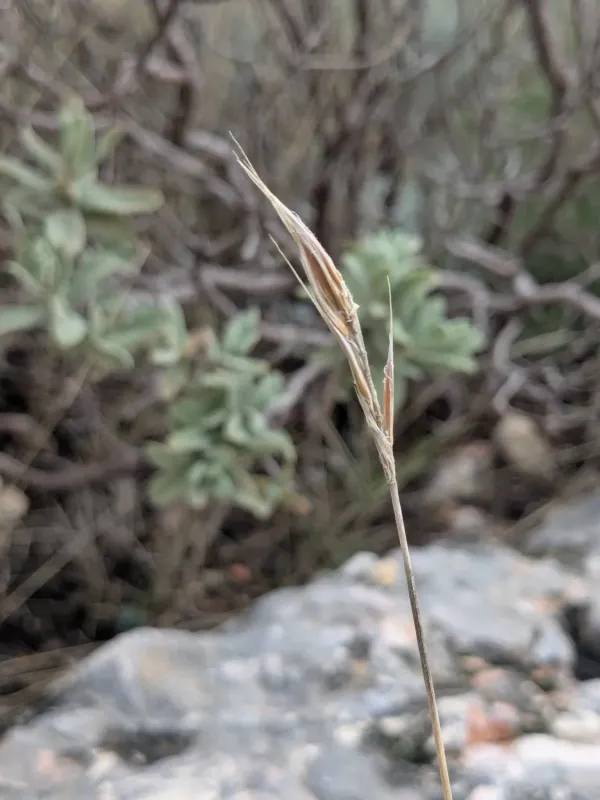
Description
Sowing dates
Brachypodium retusum is a perennial grass species belonging to the Poaceae family, widely recognized for its endurance in Mediterranean-type climates. Natural propagation occurs primarily through seeds dispersed during late summer and autumn.
For agricultural purposes, sowing is best performed in early spring. Preparing a clean, well-tilled seedbed is essential to ensure that the small seeds have optimal contact with the soil for successful germination.
The sowing depth should remain shallow, typically around 1 cm, to prevent the seedlings from exhausting their energy reserves before reaching the surface. Surface rolling after planting is highly recommended.
In addition to sexual reproduction, the species utilizes underground rhizomes to spread, creating a dense root mat that is beneficial for soil stabilization in slope management projects.
Seedlings initially develop slowly. During this establishment phase, it is crucial to manage competition from faster-growing annual weeds to ensure the grass stands can mature effectively.
Growing requirements
This grass is remarkably drought-tolerant, exhibiting xerophytic characteristics that allow it to thrive in dry, rocky, and nutritionally poor environments where other crops fail.
The species prefers calcareous soils and performs best in well-drained locations. It is highly intolerant of waterlogging, which can lead to root decay and significant population loss.
High light intensity is essential for the healthy development of Brachypodium retusum. It should be grown in open fields rather than under the canopy of dense forest or windbreaks.
The plant demonstrates excellent resilience to extreme seasonal temperature fluctuations. It remains dormant during the hottest and driest periods and resumes rapid growth as soon as moisture becomes available.
Nutrient requirements are relatively low compared to intensive cereal crops. While it responds to moderate nitrogen fertilization, it is specifically adapted to perform in low-fertility landscapes.
Yield
The biomass yield of Brachypodium retusum is modest but consistently reliable across different environmental conditions. Its primary agricultural value lies in its longevity as a permanent cover.
As a perennial species, it provides a stable source of forage for livestock. Its ability to regrow early in the season makes it a valuable component of grazing calendars in arid regions.
Forage quality is highest during the vegetative stage. Farmers should manage grazing intensity to keep the plant in a palatable, succulent state rather than allowing it to reach maturity and become lignified.
In mixed pasture systems, its inclusion increases the resilience of the entire sward against environmental stress, ensuring that there is always available biomass for grazing livestock.
When used for hay production, harvesting at the early booting stage ensures the best balance of protein content and digestible energy for the animals.
Main diseases and pests
Brachypodium retusum is notably robust and resistant to most common grass diseases. Its hard, somewhat sclerophyllous leaves provide a physical defense against many generalist insect pests.
During exceptionally humid springs, the grass may be susceptible to fungal infections like rust. Maintaining an appropriate stand density helps improve airflow and reduces these risks.
Overgrazing is the primary threat to stand health. Constant, heavy grazing depletes the energy reserves stored in the rhizomes, leading to reduced vigor and vulnerability to secondary soil pathogens.
While few pests pose an economic threat to this crop, monitoring for locusts or localized outbreaks of aphids during prolonged droughts is advisable in intensive management scenarios.
Sustainable land management, including rotational grazing, is the most effective biological tool for controlling threats and maintaining the long-term productivity of the grass stand.
Harvesting
Harvesting for hay requires precise timing. Cutting should occur just before or at the onset of flowering to capture the highest nutritional density before structural carbohydrates increase.
Mechanical harvesting equipment is generally efficient for this crop. Because the plant dries relatively quickly, haymaking is usually straightforward in sunny, arid conditions.
If harvesting for seed, the timing is critical. Since the seeds can shatter easily upon reaching full maturity, producers should monitor the moisture content of the inflorescences closely.
Post-harvest management should focus on allowing the grass to recover its root reserves. Refraining from heavy grazing immediately after a mechanical harvest is beneficial for plant longevity.
With correct management, a stand of Brachypodium retusum can remain productive for many years, providing a sustainable return on the initial investment in land preparation and sowing.