
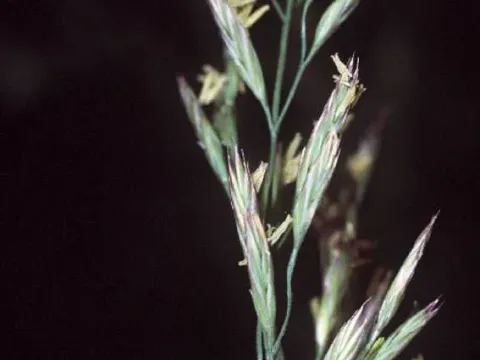
Loose fescue
Festuca laxa
Loose fescue (Festuca laxa) is a perennial grass belonging to the Poaceae family. It is naturally adapted to high-altitude mountain environments, primarily in Europe, where it thrives in rocky and alpine meadows.
What the section contains
Loose fescue
The plant demonstrates significant hardiness, being well-suited for cooler climates with harsh winters. It requires well-drained soils and does not tolerate waterlogging, making it ideal for hilly or sloped terrain where drainage is natural.
In terms of light, loose fescue prefers sunny or semi-shaded locations. It has a high tolerance for nutrient-poor soils, which makes it an excellent choice for land reclamation and improving pasture quality on marginal lands.
The root system of Festuca laxa is well-developed, allowing the plant to anchor firmly into the ground. This feature is particularly valuable for preventing soil erosion on slopes, as the dense root mass stabilizes the topsoil effectively.
Regarding climate, the species thrives in regions with moderate moisture levels. It is capable of enduring dry spells due to its adaptive metabolic mechanisms, though optimal growth is achieved with regular, moderate rainfall during the spring and early summer.
Loose fescue is highly valued in agriculture as a long-term forage crop. It provides a consistent and nutritious source of greenery for livestock, maintaining its palatability throughout the grazing season.
The forage yield is characterized by a high proportion of basal leaves, which are rich in essential nutrients. When managed correctly, these grasslands can be productive for many years, significantly reducing agricultural operational costs.
The plant is suitable for both grazing and hay production. For haymaking, it is recommended to harvest at the onset of flowering to maximize the nutrient content of the dried biomass.
Loose fescue is often included in seed mixtures for permanent pastures. Its ability to regrow quickly after grazing makes it a reliable component for rotational grazing systems, ensuring a steady supply of fodder.
Beyond agricultural fodder, the plant holds value in sustainable land management. Its longevity makes it a low-maintenance option for maintaining vegetation cover on large agricultural properties.
While generally robust, loose fescue can be susceptible to fungal pathogens such as rust and powdery mildew. These issues typically emerge in environments with poor air circulation or excessive soil moisture.
Insect pests, including cereal flies and stem nematodes, can impact yield in high-density stands. Regular field inspections are essential to detect infestations early and prevent them from spreading across the pasture.
Management strategies focus on preventive care, such as maintaining appropriate stocking rates and ensuring nutrient balance. Over-fertilization, especially with nitrogen, can make the grass more susceptible to disease and lodging.
Mechanical control, such as timely mowing or controlled grazing, is the most effective way to manage potential threats without relying heavily on chemical inputs. This approach preserves the nutritional quality of the forage.
In summary, the plant's natural resistance is high, and most threats can be mitigated through proper agronomic practices and field maintenance. Monitoring the health of the root zone and soil drainage remains the best defense.