
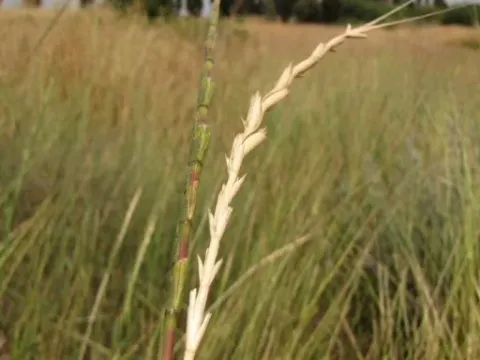
Longissima goatgrass
Aegilops longissima
Aegilops longissima, commonly known as Longissima goatgrass, is an annual grass species belonging to the Poaceae family. This plant is recognized globally as a critical wild relative of bread wheat, possessing a rich genetic pool for agricultural improvement.
What the section contains
Longissima goatgrass
The species is indigenous to the Eastern Mediterranean region, including parts of Israel, Jordan, and Lebanon. It typically thrives in arid to semi-arid environments, often colonizing stony slopes and disturbed habitats where few other cereals can survive.
Botanically, it is characterized by its slender stems, narrow leaves, and distinct long-awned spikes. The plant's morphology is finely tuned to its harsh environment, allowing it to complete its reproductive cycle efficiently under conditions of moisture stress.
In terms of climate requirements, this species is highly drought-tolerant and heat-hardy. It is adapted to a Mediterranean climate pattern, where growth occurs during the cool, wet season, followed by maturation before the extreme heat of the summer solstice.
Regarding soil preference, it favors well-drained, alkaline, or calcareous soils. While it can survive on nutrient-poor ground, supplemental fertilization in controlled breeding environments often leads to higher seed viability and better reproductive performance.
Aegilops longissima is widely studied for its impressive resistance to various fungal pathogens. Its genetic makeup provides essential traits for wheat resistance, particularly against stem and leaf rusts, which are major threats to cereal production.
Despite its robustness, the plant can be susceptible to powdery mildew when grown in dense greenhouse conditions with poor air circulation. Proper spacing and ventilation are essential management strategies to maintain the health of the research specimens.
Insect pests like cereal aphids can occasionally infest the plant, potentially acting as vectors for viral diseases. Integrated pest management practices, including careful monitoring and biological controls, are used to mitigate these risks in seed banks.
Weed competition is a significant challenge during the seedling establishment phase. As a wild species with a slower initial growth rate compared to commercial cultivars, it requires manual weeding to prevent encroachment by more competitive grasses.
To protect the genetic integrity of the species, researchers utilize sterile cultivation conditions. This prevents cross-pollination with invasive species and ensures that the seeds produced remain pure for future biotechnological research and breeding programs.