
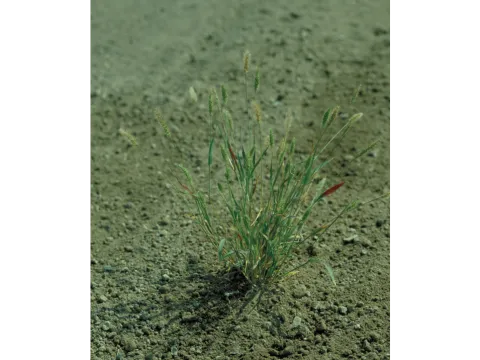
Long-awned bristle grass
Setaria longiseta
Long-awned bristle grass, belonging to the Poaceae family, is a warm-season crop that requires high temperatures for successful germination and initial establishment.
What the section contains
Long-awned bristle grass
Planting should only commence once soil temperatures reach 12–15 degrees Celsius at sowing depth, ensuring optimal and uniform field emergence.
The seeds of this species are small, necessitating a finely prepared seedbed and shallow sowing depth to avoid burying the seeds too deeply to sprout.
Inconsistent planting depth or premature sowing into cold soil typically results in sparse stands and reduced vigor throughout the early developmental stages.
Farmers often utilize row seeding to maximize the efficiency of space and light, which significantly aids in rapid canopy closure and weed suppression.
This grass is highly photophilous and demands significant thermal units throughout the growing season to reach its full biological potential.
While adaptable to various soil types, the plant achieves the highest biomass production in fertile, well-drained loams and alluvial soils with balanced nutrients.
Moderate drought tolerance is a characteristic of the species, but high-yield objectives require stable soil moisture, particularly during active growth periods.
Waterlogging and soil compaction are detrimental to the root system, which thrives best when the soil structure allows for adequate aeration and deep rooting.
Agricultural success is heavily dependent on nutrient management, specifically nitrogen application, which drives the vegetative growth essential for forage production.
The total yield potential of long-awned bristle grass is intrinsically linked to the intensity of management practices, including timely fertilizing and field upkeep.
When managed properly, the crop is capable of producing multiple cuttings within a single season, providing a high volume of dry matter per hectare.
Productivity peaks when the harvest is timed according to the nutritional requirements, as protein levels typically decrease as the plant reaches full maturity.
Variations in regional climate significantly influence final yield, making localized variety testing essential for selecting the best-performing genetic material.
Harvesting strategies that prioritize the regrowth potential of the stand can substantially improve the overall output and sustainability of the cropping system.
Pest management is crucial for the success of this crop, as cereal flies and aphids can cause significant damage to young vegetative tissue.
Fungal diseases, including smut, can pose a risk to the inflorescences, especially in seasons with high humidity during the reproductive phases of growth.
Weed competition remains the primary challenge in early development, as the crop is vulnerable to nutrient and light deprivation before reaching maturity.
A structured approach to crop protection, incorporating sound rotation practices, is the most effective way to minimize the pressure from common grass pests.
- Implementing strict weed control in the first 30 days.
- Using treated seeds to prevent soil-borne disease infection.
- Monitoring fields for insect populations during the tillering stage.
The harvest timing is dictated by the intended use: early cutting is preferred for high-protein green fodder, while later stages suit silage production.
Modern equipment like mower-conditioners is recommended to speed up the drying process and ensure the harvested material retains its nutritional value.
Proper wilting and aeration of the windrows are critical to preventing spoilage and ensuring that the hay reaches the moisture content required for safe storage.
When ensiling, the particle size and compaction density are key factors in creating an anaerobic environment that preserves the forage quality for months.
Post-harvest handling of any seed intended for future planting requires careful cleaning and moisture reduction to ensure high germination rates next season.