
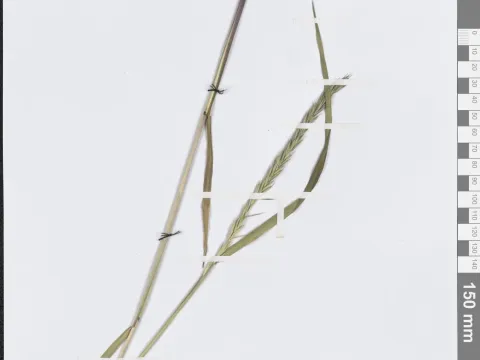
Elymus mutabilis
Elymus mutabilis
Elymus mutabilis, commonly known as the changeable wheatgrass, is a resilient perennial grass species belonging to the Poaceae family, widely appreciated for its adaptability to northern environments.
What the section contains
Elymus mutabilis
The optimal time for sowing is during the early spring season, ensuring the soil has thawed sufficiently to allow for uniform germination and establishment of the root system.
It is recommended to plant the seeds at a shallow depth of 1-3 cm, depending on the soil structure, to facilitate emergence while preventing the seeds from drying out in the topsoil.
Seed drilling with a standard row spacing of 15-20 cm is preferred to balance the crop density and minimize weed competition during the critical initial year of growth.
Establishing this grass requires patience, as the seedlings demonstrate relatively slow initial growth, necessitating careful weed control to ensure the crop successfully dominates the plot.
This species is exceptionally well-suited for cold, temperate climates, exhibiting remarkable frost tolerance and the ability to persist through severe winter conditions.
It thrives in well-drained, fertile loamy or sandy loam soils but shows a poor tolerance for waterlogged areas, where root aeration is compromised and rot may occur.
Elymus mutabilis prefers neutral to slightly alkaline pH levels and may require periodic lime applications if grown on naturally acidic soils to maintain optimal growth rates.
Nitrogen fertilization is essential for maximizing biomass production, as this species responds vigorously to nutrient inputs, especially after the spring thaw or following a cut.
The natural range of this grass covers alpine and sub-arctic regions, indicating its high resilience against temperature fluctuations and extreme weather events.
Under managed conditions, this crop yields a significant quantity of green fodder, often ranging between 20 to 30 tons per hectare depending on site fertility and available moisture.
When harvested for hay, the yield is typically between 4 and 7 tons per hectare, resulting in a nutrient-dense feed source that is highly digestible for livestock animals.
The species is highly regarded for its rapid regrowth capacity after harvest, allowing for multiple cuts in a single growing season under favorable environmental conditions.
A established stand of Elymus mutabilis can remain productive for several years, often maintaining high nutritional value for up to 6–8 years with proper rotation management.
Strategic fertilizer application and moisture management are the primary drivers for achieving the genetic yield potential of this robust perennial forage grass.
Fungal diseases, including leaf rust and various mildews, may affect the foliage during exceptionally humid summers, necessitating proper field ventilation and density control.
Insect pests such as grain aphids and thrips can occasionally damage young shoots, requiring monitoring during the early stages of the growing season to prevent severe outbreaks.
Ergot fungus is a potential concern for the seed heads; therefore, using certified disease-free seed and maintaining clean planting equipment is crucial for agricultural safety.
Proper field hygiene, including the removal of infected debris after harvest, significantly reduces the overwintering potential of common fungal spores and pests.
The use of integrated pest management practices is recommended to keep damage below the economic threshold without excessively relying on chemical treatments.
The ideal time to harvest for high-quality hay is during the booting to early heading stage, before the lignification of the stems reduces the overall digestibility of the forage.
For seed production, harvesting should be performed when the heads reach the waxy maturity stage, ensuring the seeds are developed but before natural shattering occurs.
Efficient drying is necessary to preserve the quality of the cut material; using mower-conditioners can significantly reduce field drying time and improve nutrient retention.
It is important to adjust harvesting equipment carefully to minimize grain loss during seed collection, as the seeds of this species are often lightweight.
Post-harvest management, such as light grazing, can be employed to utilize the regrowth, but care must be taken to avoid overgrazing to ensure the longevity of the stand.