
Elliott's lovegrass
Eragrostis elliottii
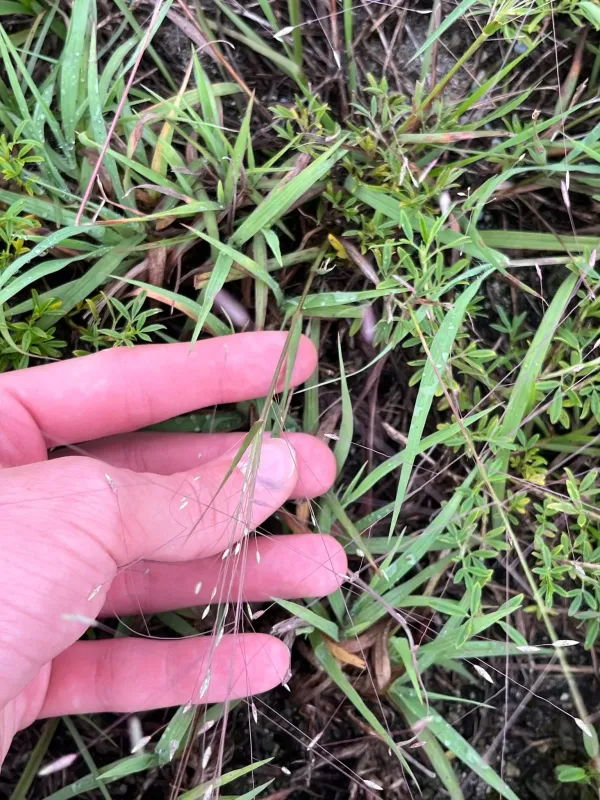
Description
Sowing dates
Elliott's lovegrass is a perennial bunchgrass belonging to the Poaceae family. In its natural range, seeding is typically carried out in late spring when soil temperatures are warm enough to trigger active germination.
The sowing technology involves superficial or shallow covering of the seeds, as they are very fine. It is essential to ensure good contact between the seeds and moist soil to prevent the seedlings from drying out during the critical early stages of development.
For establishing productive pastures or hay fields, a seeding rate that creates a dense stand is recommended to help the crop outcompete weeds during the establishment phase.
After seeding, rolling the field is beneficial to improve capillary moisture movement to the seeds, which is vital for grasses in this genus during drier weather conditions.
This species demonstrates an excellent ability to self-propagate and maintain its stand in suitable environments, allowing for long-term use in agricultural systems without frequent reseeding.
Growing requirements
The plant is native to the southeastern regions of North America, where it has adapted to sandy, well-drained soils with relatively low nutrient levels.
Elliott's lovegrass thrives in sunny locations and shows poor tolerance for prolonged shade, which limits its suitability for wooded areas or highly competitive intercropping systems.
The crop is known for its high heat tolerance and moderate drought resistance, making it a viable candidate for cultivation on poor, sandy soils where more demanding forage grasses would struggle.
Optimal soil pH for this grass ranges from slightly acidic to neutral, allowing it to be grown across a variety of site conditions within its hardiness zone.
Although the plant is quite hardy, it is highly sensitive to waterlogging and poor drainage, so fields with high water tables are generally unsuitable for this variety.
Yield
The primary agricultural use of Elliott's lovegrass is for hay production and as a perennial pasture grass for livestock grazing.
The biological value of this crop lies in its ability to produce consistent biomass on low-fertility soils, where common forage grasses often fail to yield significant results.
- High resistance to grazing pressure and livestock trampling.
- Good palatability for livestock during early vegetative growth stages.
- Potential use as an ornamental grass in xeriscaping or landscape architecture.
The forage yield is directly linked to the application of fertilizers, particularly nitrogen, which encourages vigorous regrowth following harvest or grazing.
Under a well-managed grazing rotation, the crop can support multiple harvests per growing season while maintaining the overall energy reserves in its root system.
Main diseases and pests
Common issues for this species include various leaf spot diseases of fungal origin, which tend to proliferate during periods of high atmospheric humidity.
Insect pests, such as cereal aphids, can infest stands during periods of rapid growth, necessitating monitoring of the crop health in late spring.
Root-related pathogens can accumulate if crop rotation practices are ignored; therefore, maintaining an interval between grass crops is a standard preventative strategy.
Weeds pose a significant threat during the first year of establishment, making weed control during the initial growth phase a key factor in protecting the potential yield.
Proactive management includes timely harvesting and preventing the stand from becoming overly mature, as aging plant tissues become more susceptible to pest and disease pressure.
Harvesting
The harvest timing is determined by the heading phase, as this period offers the best balance between overall biomass volume and nutrient quality.
For hay production, cutting should occur before the stems become overly lignified to ensure the highest concentration of proteins and sugars remains in the final product.
Cutting height should be carefully regulated to avoid damaging the growing points, ensuring the grass can recover quickly for subsequent grazing or harvest cycles.
The harvested forage requires efficient drying to prevent quality loss caused by rainfall, which can negatively impact the color and aroma of the hay.
Properly planned harvesting techniques help maintain the productive lifespan of the stand, preventing unnecessary stress on the plant's root system.