
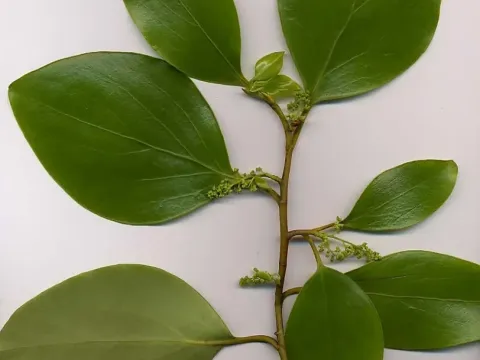
New Zealand broadleaf
Griselinia robusta
The New Zealand broadleaf (Griselinia littoralis) is an evergreen shrub belonging to the Griseliniaceae family. It is native to New Zealand and is widely recognized for its bright, apple-green, leathery foliage that provides year-round color.
What the section contains
New Zealand broadleaf
This species thrives in mild climates and is exceptionally tolerant of coastal conditions, including high salt exposure and strong winds. It prefers a sunny position or light shade and requires moist, well-drained soil to develop a healthy root system.
Regarding soil requirements, it performs best in fertile, slightly acidic to neutral soils. In heavy clay conditions, incorporating organic matter and ensuring proper drainage is crucial to prevent root zone suffocation.
Cultivation practices involve moderate watering during establishment and dry seasons. It is a slow-to-moderate grower that benefits from a balanced fertilizer application in early spring to encourage dense foliage growth.
The plant is highly valued for its versatility in landscaping. It is frequently used for dense hedges, privacy screens, and topiary. Its ability to tolerate clipping makes it a top choice for formal and informal garden designs.
Griselinia littoralis is generally robust and free from significant pest infestations, making it an excellent choice for low-maintenance gardening.
However, it can be susceptible to root rot if grown in waterlogged conditions. Ensuring that the soil does not stay saturated is the most effective preventative strategy.
In certain conditions, leaf spot diseases caused by fungi can occur, especially if there is poor air circulation around the plants. Pruning to maintain an open structure is recommended.
Pests like scale insects may occasionally appear. They are typically controlled using horticultural oils or systemic insecticides, provided they are applied during the early stages of infestation.
Regular monitoring and keeping the base of the plant free from debris help in maintaining overall plant health. Providing proper spacing between individual shrubs further minimizes the risk of pathogen spread.