
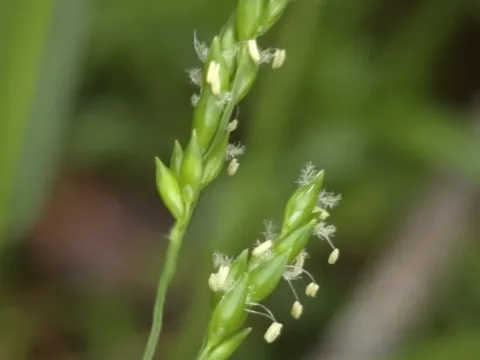
Entolasia
Entolasia
Entolasia is a genus of perennial herbaceous plants belonging to the Poaceae (grass) family. In agricultural settings, these plants are valued as potential forage crops that are well-adapted to specific ecological niches and environmental conditions.
What the section contains

Entolasia
Botanically, these grasses are characterized by a bunch-type growth habit and an extensive root system, which helps in soil stabilization. The stems are typically erect or ascending, while the leaves exhibit the classic lanceolate shape common to many tropical and subtropical grass species.
The primary natural range of Entolasia includes regions of Australia and parts of the African continent. In the wild, these plants thrive in well-lit areas, frequently inhabiting forest clearings and savannah ecosystems where sunlight exposure is optimal.
This crop has moderate soil requirements, preferring well-drained substrates. It shows significant resilience to short periods of drought, which makes it a viable candidate for cultivation in regions characterized by inconsistent precipitation patterns and warm climates.
The agricultural utility of Entolasia is primarily linked to its role in establishing long-term pastures. The plants demonstrate an excellent capacity for regrowth after grazing or mechanical mowing, providing a consistent source of nutritional biomass for livestock operations.
Like many other members of the Poaceae family, Entolasia can be susceptible to fungal pathogens such as leaf rust or powdery mildew, particularly during periods of high humidity. Effective management involves ensuring proper planting density and maintaining good field hygiene to prevent stagnant moisture.