
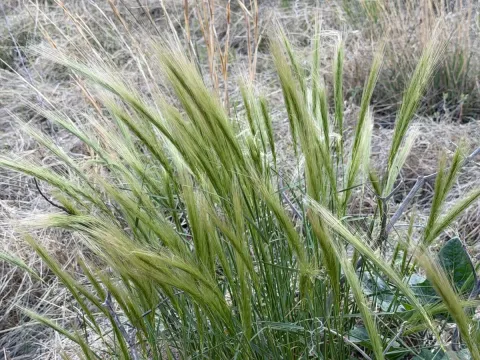
Elymus elymoides
Elymus elymoides
Sowing of Elymus elymoides is typically performed in late autumn or early spring to ensure optimal soil moisture levels for germination. The seeds require a period of cool, moist conditions to break dormancy effectively.
What the section contains
Elymus elymoides
The seeds should be planted at a shallow depth of approximately 1 to 2 centimeters. Proper soil-to-seed contact is essential for successful establishment, which can be achieved through light harrowing or rolling after sowing.
Seeding rates should be adjusted based on the purity and germination percentage of the seed lot, typically ranging from 6 to 10 kilograms per hectare. Lower densities are often preferred in semi-arid environments to reduce intra-species competition for moisture.
When overseeding into existing rangelands, it is recommended to reduce the density of competing vegetation before planting. This allows the newly emerged seedlings to access sufficient sunlight and soil nutrients during their vulnerable early growth stages.
Mechanical planting equipment with depth control is preferred over broadcasting to ensure uniform distribution and prevent seed loss to avian foragers or surface erosion.
Elymus elymoides, commonly known as squirreltail, is a native perennial grass belonging to the Poaceae family. It is widely distributed across the western regions of North America, where it thrives in various habitats ranging from plains to mountain slopes.
This species is highly regarded for its exceptional cold and drought tolerance. Its deep root system allows it to persist through harsh environmental conditions, making it an excellent choice for revegetation projects in degraded areas.
The plant performs best in well-drained, neutral to alkaline soil types, including sandy loams and silt loams. It does not tolerate waterlogging and may succumb to root rot if the soil remains saturated for extended periods during the growing season.
Sunlight exposure is a critical requirement for this species. It is a heliophilous plant that exhibits reduced vigor and seed production when shaded by overhanging canopy or dense shrub cover.
Elymus elymoides plays a crucial role in early succession following disturbances like wildfires. It rapidly establishes on burnt sites, providing essential soil stabilization and serving as a pioneer species that prepares the ground for other vegetation.
The yield of Elymus elymoides is largely dictated by precipitation patterns during the growing season. While it is not as productive as some introduced agricultural grasses, its reliability in low-moisture environments is its primary advantage.
Nutritional value is highest during the early vegetative stage. As the plant matures and produces its characteristic bristly seed heads, the protein content decreases, and the digestibility is reduced due to increasing fiber levels.
Management through rotational grazing is highly recommended to maintain the stand's vigor. By allowing recovery periods between grazing events, the plants can replenish their carbohydrate stores in the roots, ensuring longevity.
For hay production, it is vital to harvest before the seed heads mature and develop sharp awns, which can cause physical injury to livestock. Early harvesting ensures higher feed quality and better palatability for cattle and sheep.
Dry matter yields under favorable non-irrigated conditions typically range from 1.5 to 3 metric tons per hectare. Its primary economic value lies in its longevity and resilience rather than massive biomass production.
Fungal pathogens such as rusts and powdery mildew can affect the foliage during periods of high humidity or poor air circulation. These diseases reduce the photosynthetic capacity and overall vigor of the plants.
Insect pests, including aphids and various grass-feeding larvae, can cause damage to the leaves and stems. Integrated pest management practices, such as maintaining healthy, vigorous stands, are the most effective way to minimize losses.
Invasive weed species pose a significant threat to Elymus elymoides stands, especially in the establishment year. Controlling competing vegetation through mechanical or chemical means is necessary for the grass to successfully colonize the area.
Overgrazing is a major threat to long-term stand sustainability. Excessive grazing pressure removes the growing points and depletes root reserves, leading to stand thinning and the encroachment of undesirable invasive weeds.
Root rot caused by poor soil drainage can kill large patches of the stand. Careful site selection, avoiding areas prone to puddling or heavy clay accumulation, is the primary preventative measure for this threat.