
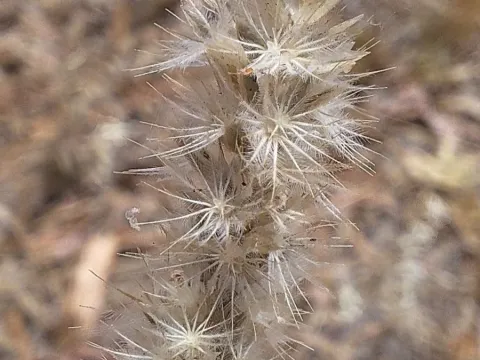
Enneapogon
Enneapogon
Enneapogon is a genus of perennial grasses characterized by their resilience in arid climates, with sowing strategies typically synchronized with the onset of seasonal rainfall.
What the section contains
 Bottle Washers
Enneapogon avenaceus
Bottle Washers
Enneapogon avenaceus
 Enneapogon desvauxii
Enneapogon desvauxii
Enneapogon desvauxii
 Enneapogon nigricans
Enneapogon nigricans
Enneapogon nigricans
 Enneapogon persicus
Enneapogon persicus
Enneapogon persicus
 Enneapogon polyphyllus
Enneapogon polyphyllus
Enneapogon polyphyllus
 Enneapogon scaber
Enneapogon scaber
Enneapogon scaber
 Enneapogon scoparius
Enneapogon scoparius
Enneapogon scoparius
 Nine-awn grass
Enneapogon cenchroides
Nine-awn grass
Enneapogon cenchroides
Enneapogon
The ideal planting time occurs in the early growing season when soil temperatures remain consistently above 15–18 degrees Celsius, facilitating rapid seed germination.
Given the small seed size of these grasses, precise seedbed preparation involving shallow harrowing is necessary to avoid burying the seeds too deep in the soil profile.
Broadcasting seeds followed by light soil compaction often yields the best results, ensuring the necessary soil-to-seed contact for water absorption during early stages.
Farmers often rely on the species' natural ability to regenerate from a soil seed bank, making managed grazing a tool to stimulate natural reseeding across pastures.
Belonging to the Poaceae family, Enneapogon is well-adapted to extreme environmental conditions and is a notable example of a grass with C4 photosynthetic pathways.
These plants thrive in well-drained, sandy, or rocky soils, where they effectively avoid the root stress associated with waterlogging and poor soil aeration.
The species is highly heat-tolerant, making it an essential component of the vegetation in tropical and subtropical regions characterized by long periods of drought.
Soil pH preference typically ranges from neutral to slightly alkaline, reflecting the natural ecology of its native habitats across Australia, Africa, and Asia.
Minimal competition from dense canopy vegetation is required, as Enneapogon is primarily a light-loving species that struggles to grow under heavy shade.
The primary agricultural use of Enneapogon is to provide a stable forage base for grazing livestock, especially during dry seasons when other grasses become dormant.
While the overall biomass yield per hectare is lower than intensive hay crops, its nutritional consistency under stress provides high value for sheep and cattle production.
The grass is highly valued for its role in soil stabilization, as its deep and spreading root system effectively binds topsoil in areas prone to desertification.
Strategic grazing management is required to maintain the productivity of these stands, preventing the total depletion of carbohydrate reserves in the root crown.
In degraded landscapes, Enneapogon serves as a pioneer species that assists in the restoration of vegetative cover, slowly improving the condition of the pasture.
Enneapogon exhibits strong innate resistance to many common fungal and bacterial diseases, primarily due to its survival in high-stress, low-humidity environments.
The most significant threat to the species is overgrazing, which depletes the plant's ability to regenerate and opens the soil to invasive opportunistic weeds.
While generally pest-free, localized damage from grasshoppers or locusts can occur during outbreak years, necessitating biological monitoring in vulnerable pastures.
Root rot remains a potential issue only if the plant is subjected to stagnant water, which is uncharacteristic of its typical rocky or sandy growing environment.
Proper pasture rotation is the most effective defense strategy, ensuring that the plant population retains its vigor against biotic and abiotic stressors throughout the year.
Harvesting for fodder is typically conducted during the peak of the flowering stage, ensuring that the nutritional content of the leaves is balanced with fiber.
To ensure successful regrowth, harvesters must leave a stubble height of at least 5 to 7 centimeters to protect the basal buds of the grass plant from damage.
Seed harvesting requires careful timing; the inflorescences should be collected when they reach physiological maturity but before natural shattering occurs in the field.
After cutting, the biomass must be dried promptly under low humidity to prevent bacterial growth and the loss of quality due to spoilage in stored hay piles.
Regular maintenance cuts can also serve to thin out old, dead tissue, encouraging the plant to produce fresh, nutrient-rich green growth for the next grazing cycle.