
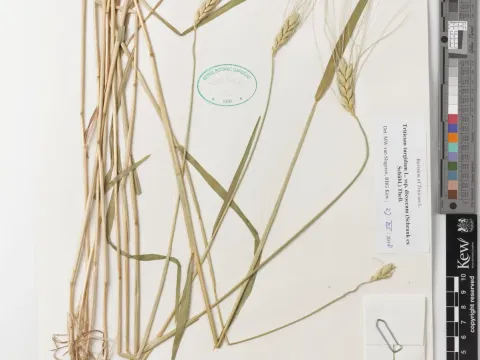
Emmer wheat
Triticum dicoccon
Emmer wheat is typically sown in early spring as soon as the soil can be worked, ensuring the plant establishes itself before the onset of summer heat.
What the section contains
Emmer wheat
The optimal seeding depth is around 3 to 5 centimeters, which provides the seed with sufficient moisture for germination while protecting it from surface fluctuations.
Careful seedbed preparation is essential, as the crop requires a firm soil structure to support early development and effective nutrient uptake.
Seeding rates generally range from 150 to 200 kilograms per hectare, depending on the seed size and the specific regional climatic conditions.
Drilling the seeds in rows helps facilitate mechanical weeding during the early stages, as the plant spends significant time in the rosette phase.
Emmer is renowned for its hardiness and ability to thrive in poor or rocky soils where modern wheat varieties might struggle to produce a viable crop.
The plant demonstrates remarkable drought resistance once established, making it a sustainable choice for regions with erratic rainfall patterns.
It prefers well-drained soils with a slightly acidic to neutral pH, though it shows impressive tolerance to different soil textures and fertility levels.
Temperature requirements for growth are moderate, and the crop is particularly well-adapted to cooler climates where growing seasons are relatively short.
Adequate sunlight is necessary for optimal development, especially during the flowering and grain-filling stages to ensure high-quality yields.
The yield potential of Emmer is generally lower compared to intensive modern wheat, often producing between 2 and 3 tonnes of grain per hectare.
However, the value of the grain compensates for the lower volume, as Emmer is highly sought after for its nutritional profile and distinctive culinary characteristics.
Yield stability is a key trait of this ancient grain, as it is less susceptible to failure under extreme weather conditions compared to high-input varieties.
Modern breeding programs are working to select lines that offer improved threshability and higher kernel weight without compromising the plant's natural resilience.
Proper nutrient management, specifically avoiding excessive nitrogen application, helps prevent lodging and maintains the crop's structural integrity.
Emmer wheat possesses high innate resistance to several common cereal diseases, significantly reducing the reliance on chemical pesticides and fungicides.
Pests like cereal flies and various beetle species can pose a threat during the early seedling stage, necessitating vigilant field scouting.
Fungal issues, such as Fusarium head blight, may occur in seasons with high humidity during the anthesis period, requiring proper crop rotation practices.
Weed management remains the most significant challenge in Emmer cultivation, as the crop has a relatively slow growth rate in the initial weeks.
Implementing a diverse rotation cycle effectively breaks the disease and pest life cycles, promoting overall field health and long-term sustainability.
Harvesting Emmer is a specialized process, as the kernels are tightly encased in glumes that do not easily separate during the initial threshing stage.
It is best to harvest when the moisture content is low, typically around 14 percent, to ensure the grain can be stored safely without artificial drying.
The combine harvester settings must be adjusted to minimize damage to the hull, ensuring the grain stays protected until it reaches the processing facility.
Post-harvest processing requires a dedicated dehulling machine to strip away the tough glumes and reveal the nutritious grain kernel for human consumption.
Storing the crop in its hulled form provides a natural layer of protection, which helps maintain quality and viability for longer periods under standard conditions.