
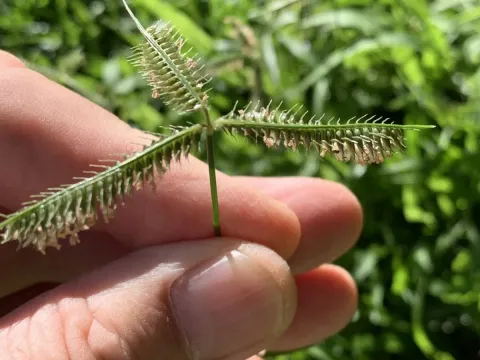
Durban crowfoot
Dactyloctenium australe
Durban crowfoot is typically sown during the warm season when soil temperatures remain consistently above 18-20°C. Planting during late spring or early summer allows the grass to establish a robust root system before any potential periods of intense heat or dryness.
What the section contains
Durban crowfoot
Seeds should be planted at a shallow depth, usually between 0.5 and 1.5 cm. Soil contact is essential, and light rolling after sowing helps ensure that seeds are properly positioned within the soil matrix, which significantly increases the germination rate.
In regions with optimal conditions, seeds can be surface-sown if sufficient moisture is provided through irrigation. For pasture establishment, broadcasting followed by harrowing is a common practice to ensure even coverage across the field.
Proper weed management during the establishment phase is critical, as young Durban crowfoot seedlings are initially slow to outcompete faster-growing weeds. Protecting the site from weed pressure for the first few weeks is vital for long-term success.
Depending on the intended use, seeding rates may vary. Higher densities are used for thick turf applications, while lower, more economical rates are typically employed when establishing large-scale pastures or erosion control zones.
Belonging to the Poaceae family, Durban crowfoot is a heat-loving, warm-season grass that thrives in tropical and subtropical climates. It requires full sunlight exposure to maintain its dense growth habit and high rate of biomass production.
This grass is highly adaptable to a wide range of soil types, including sandy, loamy, and clay soils. A standout characteristic of this species is its exceptional tolerance to saline soils, making it a preferred choice for coastal environments.
While Durban crowfoot exhibits good drought resistance once established, it performs best when provided with consistent moisture. Supplemental irrigation during prolonged dry spells will help maintain its lush, green appearance and forage quality.
The optimal temperature range for active growth is between 22°C and 30°C. Being a tropical grass, it is sensitive to frost and does not tolerate prolonged cold weather, which limits its primary cultivation to warmer climate zones.
Regular fertilization with nitrogen-based products is recommended to stimulate tillering and rapid regrowth after grazing or harvesting. Maintaining soil fertility levels ensures the longevity of the stand and maximizes overall yield per hectare.
Durban crowfoot is generally resistant to many common grass diseases, but it can be susceptible to fungal issues such as leaf spot or root rot if soil drainage is poor. Ensuring that planting sites do not suffer from waterlogging is the best preventative strategy.
Insect pests such as cutworms or grass webworms may occasionally infest stands. Integrated pest management, including regular crop scouting and the use of biological controls, is effective in keeping pest populations below economic injury levels.
In humid, high-rainfall areas, fungal pathogens may thrive if air circulation within the stand is reduced. Periodic mowing or grazing is recommended to maintain an open canopy and prevent the buildup of excessive thatch or moisture-laden debris.
Weed competition remains the primary challenge during the early stages of development. Utilizing selective herbicides designed for warm-season grasses can help control broadleaf weeds without harming the crop.
Monitoring for signs of nutritional deficiencies or pest damage should be a standard practice for managers of high-quality pastures or lawn areas. Early intervention is key to preventing large-scale spread of any issues that could affect the stand's vitality.
Harvesting Durban crowfoot for fodder is performed by mowing once the grass reaches its peak nutritional stage, which is usually just before seed head development. Frequent light cuts encourage vegetative growth rather than reproductive development.
Grazing management is also a standard approach, as the grass is highly palatable and recovers quickly under controlled rotation. It is essential to avoid overgrazing, allowing the plant to retain enough leaf area for rapid photosynthesis and regrowth.
When used for hay production, the cut grass should be dried quickly in the field to preserve its protein content and flavor. Proper timing is crucial to avoid nutrient loss that occurs as the plant moves into the seeding stage.
In landscaping contexts, regular mowing at a height of 5-8 cm helps maintain a uniform and aesthetic turf surface. This height provides enough shade for the soil surface while preventing the grass from becoming overly tall and woody.
After the final cut of the season, it is often beneficial to apply a balanced fertilizer to support the plant as it prepares for the dormant phase. This practice helps ensure healthy green-up when the warmer temperatures return.