
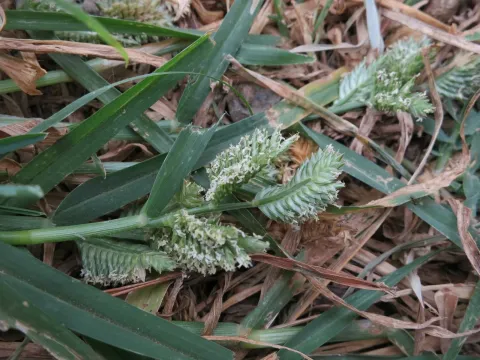
Eleusine multiflora
Eleusine multiflora
Eleusine multiflora is a heat-loving crop, therefore sowing dates must coincide with the period when soil temperatures consistently reach +15...+18°C. In temperate climates, this typically occurs in late May, once the risk of nocturnal frosts has passed.
What the section contains
Eleusine multiflora
Ensuring proper seedbed preparation is vital when sowing. The soil must be finely crumbled and sufficiently moist to support rapid seed germination. Seed planting depth generally ranges from 1 to 2 centimeters due to the small size of the seeds.
The optimal seeding rate varies depending on the intended use, whether for green fodder or seed production. A row-seeding method with 15–20 cm spacing is considered most effective for developing a dense crop stand.
In regions with prolonged springs, sowing can be done in warm, moist soil to ensure uniform emergence. The crop reacts negatively to cold soil, which may lead to fungal infections in young seedlings.
Post-sowing, it is recommended to roll the field. This improves contact between seeds and soil particles, accelerating the germination process, which is critical for the crop's ability to compete with weeds.
Eleusine multiflora belongs to the Poaceae family and is a typical heat-loving herbaceous plant. It requires high light intensity and performs poorly under shaded conditions during its active growth phase.
The crop prefers light, fertile loamy or sandy soils with a neutral or slightly acidic pH. Good drainage is an essential requirement, as water stagnation can lead to root system decay.
The plant exhibits high resistance to short-term drought, though it requires regular irrigation to achieve high biomass yields. During the hot season, Eleusine is capable of rapidly accumulating vegetative mass when sufficient nitrogen is available.
Proper agronomy requires the application of complex mineral fertilizers before sowing. Special attention should be paid to nitrogen top-dressing after the first harvest, which significantly accelerates the regrowth of side shoots.
Weeds pose a threat only during the initial growth stages, so controlling them during the first-leaf development phase is a prerequisite for successful large-scale industrial cultivation.
The yield of Eleusine multiflora depends on climatic conditions and adherence to fertilization schedules. With intensive cultivation technology, the crop is capable of providing multiple harvests per season.
The biomass is characterized by high nutritional value and good palatability for livestock. Primary accumulation of green mass occurs during the jointing phase and the beginning of heading.
Average green mass yields can range from 20 to 40 tons per hectare under favorable irrigation conditions. When grown for seeds, yields average between 0.5 and 1.2 tons per hectare.
Agricultural use includes hay harvesting, silage production, or grazing. Due to its rapid regrowth after mowing, the plant is a promising candidate for intensive livestock farming operations.
The effectiveness of the crop increases when crop rotation is maintained; Eleusine acts as an efficient predecessor for many field crops, leaving behind significant organic residues.
The main pests for this crop are cereal flies and aphids, which can damage young seedlings. Regular field monitoring allows for the timely application of insecticides during periods of peak pest infestation.
Among diseases, various types of rust and powdery mildew are most common, often triggered by high humidity and dense crop stands. These diseases significantly reduce both the quality and volume of the fodder.
To prevent pathogen infestation, agronomic seeding standards must be followed to avoid excessive plant density. This ensures better air circulation within the canopy.
Upon detecting initial signs of disease, fungicidal treatment should be applied. The selection of chemicals must comply with state catalogs of registered pesticides authorized for agricultural use.
Root rot is a particular danger during periods of soil saturation. Therefore, smart management of the water balance in the field serves as the primary preventive measure against most biological threats.
Harvesting for green fodder is conducted during the jointing phase, before the formation of coarse stems. During this period, the plant contains maximum levels of sugars and protein, ensuring high nutritional value.
For hay production, mowing is performed at the onset of flowering. It is important to complete the drying process quickly to minimize the loss of vitamins and nutrients caused by solar radiation and precipitation.
When harvesting for seeds, one should wait for the full wax-ripeness phase, when the panicles take on a characteristic color. Using combines with properly adjusted sieves minimizes the loss of small seeds.
Post-harvest processing of seed material includes cleaning and drying to a moisture content of 12–14%. This ensures high germination rates during storage for up to 2–3 years.
Timely harvesting is a critical factor, as delaying the process leads to lodging and a sharp decline in forage quality due to stem lignification.