
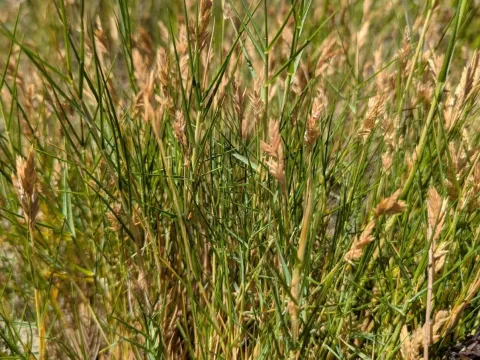
Distichlis distichophylla
Distichlis distichophylla
Distichlis distichophylla is a perennial grass species belonging to the Poaceae family. Known primarily as a halophyte, it is highly valued in agriculture for its extraordinary ability to thrive in soils with high salt concentrations that would be toxic to most conventional crops.
What the section contains
Distichlis distichophylla
Native to coastal areas, primarily in Australia, the plant has evolved to dominate saline wetlands and sandy coastal regions. Its biological features include a deep, robust root system that helps in soil stabilization and prevents wind and water erosion in harsh conditions.
The climate requirements for this culture are centered on high light intensity and thermal stability. It is exceptionally tolerant to salt-spray and periodic inundation with brackish water, making it a reliable choice for coastal agricultural projects or arid-zone land management.
Agronomic practices focus on establishing the grass in degraded lands. Because it is highly adapted to saline environments, it requires minimal soil preparation compared to standard crops. It does not need chemical fertilizers, as it is naturally optimized for nutrient-poor, saline substrates.
The primary use of Distichlis distichophylla is in phytoremediation, specifically for restoring soils affected by excessive irrigation-induced salinity. Additionally, it serves as a persistent forage resource for livestock in areas where traditional pastures cannot be sustained.
The plant is remarkably resistant to typical fungal and bacterial diseases that affect cultivated grasses. Its salty tissue chemistry acts as a natural deterrent against many generalist insect pests, reducing the need for pesticide application.
The main threats involve habitat displacement by freshwater-dependent species if the local water table is drastically altered. Invasive weeds may pose a threat during the initial establishment phase, necessitating careful site management until the colony is fully established.