
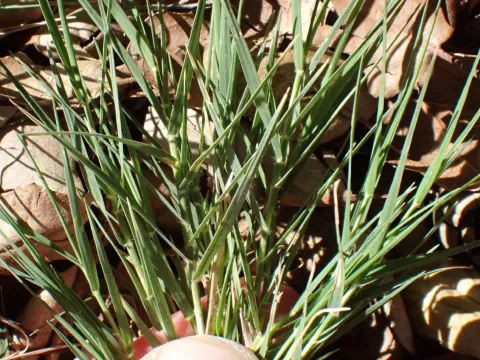
Distichlis
Distichlis
Distichlis sowing is typically conducted in the spring when soil temperatures reach 15-18°C. For successful seed germination, maintaining sufficient moisture in the topsoil layer during the first weeks after sowing is critical.
What the section contains


Distichlis
Under natural conditions, the plant reproduces primarily vegetatively through an extensive network of rhizomes. In agricultural practice, both seed sowing and the planting of rhizome segments into prepared soil are used.
The planting depth for seeds should be minimal, about 0.5-1 cm, as Distichlis seeds are quite small. When sowing directly in saline areas, a preliminary desalination of the topsoil layer via flushing irrigation is recommended.
To establish a resilient turf cover, the optimal time to begin operations is at the start of the growing season, allowing the plant to root before the onset of peak summer temperatures.
When using rhizomes, planting can occur throughout the warm season, provided that regular irrigation is maintained, ensuring high survival rates even on degraded lands.
Distichlis belongs to the Poaceae family and is a highly specialized halophyte. Its primary feature is its ability to grow in highly saline soils where other grass species would perish.
The crop is extremely undemanding regarding water quality and can tolerate irrigation with brackish or treated wastewater, making it a promising candidate for the reclamation of industrial sites.
The plant prefers well-lit areas. Distichlis demonstrates high tolerance to both prolonged flooding and short periods of drought, thanks to its powerful root system.
Soil fertility requirements are minimal. The plant is capable of anchoring itself in sandy and clayey substrates, actively participating in the stabilization of mobile soils and preventing erosion.
The optimal pH level for active growth ranges from slightly alkaline to neutral; however, its biological plasticity allows it to adapt to a wide range of soil conditions.
Distichlis biomass is primarily used as pasture forage in regions with extreme soil salinity. Although its nutritional value is lower than that of highly productive forage grasses, its salt tolerance makes it an indispensable resource.
The yield of green matter is directly dependent on moisture levels. In natural salt marsh conditions, productivity is limited, but indicators increase significantly with supplemental irrigation.
The plant has the ability to regrow rapidly after grazing or mowing. This allows it to be used for creating pastures in areas unsuitable for traditional livestock farming.
The agricultural importance of Distichlis also lies in its ability to accumulate salts in its tissues, which indirectly contributes to the desalination of the topsoil horizon when biomass is regularly removed.
To maintain high pasture productivity, it is recommended to follow a rotational grazing schedule, preventing excessive exhaustion of the root system and soil exposure.
Distichlis is noted for its exceptional resistance to diseases typical of most cereal crops. Its high osmotic concentration in cell sap makes the plant unappealing to many pathogens.
Harmful insects rarely cause economically significant damage to Distichlis stands. Most pests avoid consuming the tissues of this plant due to the high mineral salt content.
The primary threat to the crop is competition from aggressive weeds during the early stages of development. During this period, field cleanliness must be monitored.
In conditions of waterlogging and standing water on heavy soils, root rot may occur, though such cases are sporadic and generally do not require the use of fungicides.
Monitoring the condition of the stand is reduced to visual checks of the turf density and timely intervention in areas with sparse growth to prevent erosion processes.
Mowing Distichlis for hay is carried out during the period of maximum vegetative mass accumulation, before the stems begin to harden, ensuring the best palatability for livestock.
The mowing height should be at least 5-7 cm to ensure rapid vegetative recovery of the stand. Cutting too low can inhibit rhizome development.
When used as a pasture crop, a rotational grazing method is applied. This allows for effective distribution of grazing pressure on the soil and encourages uniform vegetation removal across the area.
Collecting Distichlis seeds is difficult due to a protracted ripening period and low germination rates in wild populations, so vegetative division remains the primary method of reproduction.
Post-harvest residues of Distichlis contribute to the accumulation of organic matter in the soil, improving its structure and promoting a gradual decrease in salt toxicity over the long term.