
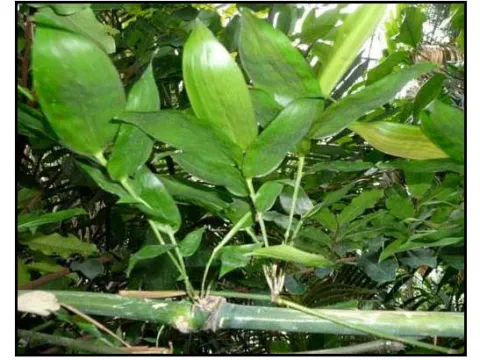
Dinochloa
Dinochloa
Dinochloa is a genus of tropical climbing bamboos belonging to the Poaceae family. These plants are characterized by their long, woody, and scrambling culms that use surrounding vegetation for support to reach the canopy layer in their native tropical forest habitats.
What the section contains

Dinochloa
The cultural requirements for Dinochloa are strictly tied to tropical lowland climates. It thrives in regions characterized by high rainfall and consistently warm temperatures throughout the year. It does not possess significant cold tolerance and requires protection from frost and freezing temperatures.
Regarding soil conditions, Dinochloa prefers deep, well-drained loamy soils rich in organic matter. While the plant requires significant moisture, it is sensitive to waterlogged conditions. Proper site selection involves ensuring that there is adequate drainage to prevent root rot.
Agronomic management of Dinochloa is complex, as it is rarely cultivated in large-scale plantations. Most propagation is performed through rhizome cuttings, as flowering events are infrequent and often unpredictable, making seed collection an impractical method for reproduction.
The economic value of Dinochloa stems from the structural strength of its culms. It is extensively used in Southeast Asia for building temporary shelters, creating intricate handicraft items, and for weaving various baskets and agricultural tools that require durability.
The main threats to the survival and productivity of Dinochloa are habitat fragmentation and deforestation. As a forest-dependent genus, the clearing of tropical jungles for industrial agriculture significantly reduces the natural stands of this bamboo.
Pathogenic threats include various fungal pathogens that thrive in the humid, shaded environment of the forest understory. These fungi can cause leaf spots and blight, which weakens the bamboo culms and renders them brittle over time.
Insects, particularly stem borers and certain species of beetles, represent a major biological risk. They bore into the woody culms to lay eggs or feed on the inner tissues, creating structural weaknesses and making the stems prone to secondary infections.
Vertebrate herbivory, especially from wild ungulates, poses a risk to young emerging shoots. These animals often feed on the tender bamboo sprouts, which limits the natural expansion of the colony and can lead to the thinning of established stands.
Management of these threats in an agricultural context requires a focus on crop hygiene. Removing damaged or infected culms helps maintain airflow, which is critical in preventing the buildup of fungal spores and reducing the attractiveness of the stand to insect pests.