
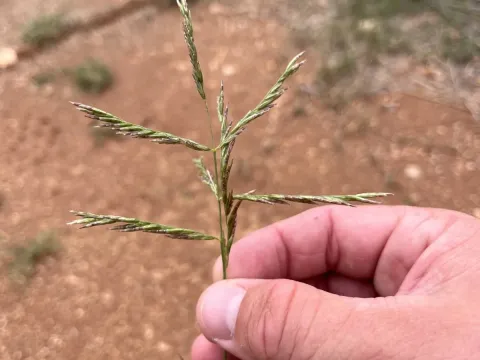
Disakisperma
Disakisperma
Disakisperma is a genus of perennial grasses belonging to the Poaceae family. These plants are known for their resilience and ability to thrive in challenging environmental conditions, particularly in warm, arid or semi-arid regions where many other forage crops struggle to survive.
What the section contains
Disakisperma
The native distribution of Disakisperma spans across tropical and subtropical areas, most notably in parts of Africa and the Americas. The plant is well-adapted to environments with seasonal rainfall patterns, making it a critical component of local ecosystems and natural grasslands.
In terms of soil requirements, the genus is notably tolerant of salt-affected substrates and can tolerate levels of salinity that would be detrimental to many commercial crops. This makes Disakisperma a potential candidate for land restoration projects and for maintaining soil structure in desertified or saline-impacted areas.
Botanically, the plant is characterized by its linear leaf blades and a distinct inflorescence, which consists of racemes arranged in a paniculate structure. These structures are optimized for efficient pollination and seed dispersal, ensuring the persistence of the species in harsh, wind-swept landscapes.
From a хозяйственное perspective, Disakisperma is primarily utilized as a source of forage for livestock in native rangelands. It contributes to soil stabilization and helps prevent wind erosion, playing a dual role as both a primary food source for grazing animals and a protective cover for the fragile soil surface.