
Cymbopogon nervatus
Cymbopogon nervatus
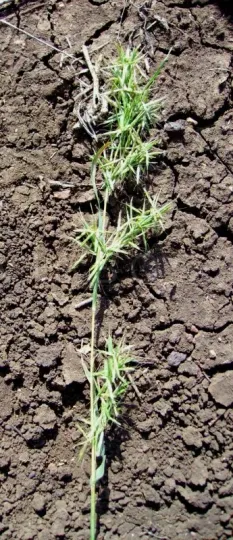
Description
Sowing dates
Sowing the crop on an industrial scale is typically carried out at the beginning of the rainy season, which ensures the seeds have the necessary moisture levels for germination. Optimal sowing dates in the regions of its natural habitat occur when soil temperatures are consistently above 20 degrees Celsius.
Seeds are sown in rows, with minimal burial depth required, as the small seeds need surface-level positioning for optimal light access. Under intensive farming conditions, propagation via pre-prepared greenhouse seedlings is also a viable method.
To ensure uniform emergence, it is recommended to maintain a seeding density that prevents excessive competition between young plants during the initial growth phases. After germination, thinning is performed to reach the optimal plant stand density.
When using seed propagation, it is important to consider the high sensitivity of seedlings to sudden temperature fluctuations. In regions with unstable climates, agronomists recommend mulching to retain soil moisture and warm up the topsoil layer.
Adhering to sowing schedules allows the plant to develop a robust root system before the dry season begins, which is a critical factor for the successful adaptation of this perennial crop in the field.
Growing requirements
Cymbopogon nervatus belongs to the Poaceae (grass) family and is a typical tropical herbaceous plant. For full development, it requires abundant sunlight and high light intensity, which directly influences the concentration of essential oils in its green biomass.
The crop prefers well-drained loamy or sandy soils with a neutral or slightly acidic reaction. The plant is highly sensitive to waterlogging in the root zone, so when selecting a site, it is crucial to avoid low-lying areas with high groundwater levels.
The temperature optimum for vegetation is between 25 and 35 degrees Celsius, though the plant can tolerate short-term droughts due to deep root penetration. However, during extreme cold, growth of the aerial parts ceases completely.
Agronomic practices include regular weeding, especially in the first months, as the crop struggles to outpace weeds during early development. Applying nitrogen fertilizers during the active growth period significantly increases the biomass volume for subsequent processing.
Fertilization programs must be balanced, accounting for the nutrient depletion caused by regular harvesting. It is also mandatory to cultivate the inter-rows to improve soil aeration and support the health of the root system.
Yield
The primary output of this crop is its essential oil, which possesses a unique composition specific to this species. The yield of green biomass depends directly on the frequency of cuts and the availability of water during active growth phases.
With proper plantation management, two or three full harvests are possible within a single growing season. Peak productivity is generally observed in the second and third years after planting, when the plant reaches its physiological maturity.
During industrial processing using steam distillation, high-quality components are extracted for use in perfumery and pharmaceuticals. It is essential to harvest before mass flowering, as the content of valuable essential oils peaks just before this stage.
Implementing a proper irrigation regime during dry periods can increase total product output by 20–30%. In intensive production, the focus is not only on total grass weight but also on the oil extraction ratio per unit area.
Specialized breeding varieties allow for consistently high yields, even in varying soil conditions, provided that standard agronomic care and maintenance protocols are strictly followed.
Main diseases and pests
The primary biological threats to Cymbopogon nervatus are fungal infections that thrive in high humidity and poor air circulation. Rust infections on the leaves can lead to a significant decline in the quality of the marketable greenery.
Root rot poses a serious danger when irrigation practices are poorly managed, especially in heavy soils prone to waterlogging. Disease prevention requires the use of high-quality seed material and strict adherence to crop rotation cycles.
Among pests, various insects that feed on the sap of young shoots, including aphids and spider mites, cause the most damage. Monitoring pest populations must be performed regularly throughout the active growth phase.
The use of chemical pesticides is restricted due to the need to maintain the purity of raw materials destined for essential oil extraction. Biological control methods, using natural predators of pests, are highly recommended as an alternative.
Prompt removal of damaged plant segments helps contain disease outbreaks at early stages, preventing widespread epiphytotic events within the plantation.
Harvesting
The harvesting process involves cutting the aerial parts of the plant at a height of approximately 5-10 centimeters from the ground. This encourages rapid regrowth of new shoots and ensures the longevity of the perennial root system.
To mechanize the harvesting process, specialized mowers adjusted to the appropriate cutting height are used. Cut biomass must undergo primary processing or drying within the shortest possible timeframes.
An essential requirement is to exclude foreign objects and weeds from the harvested material, as these can reduce the quality of the final product. Transport to the processing facility must occur in ventilated containers to prevent the grass from overheating and rotting.
The best time for harvesting is early morning after the dew has evaporated but before the heat of the day reaches its peak. This helps preserve volatile essential oil components that can evaporate if the plant overheats.
Following each harvest cycle, the plantation requires a recovery period, which includes supplemental fertilization to stimulate metabolic processes in the rhizomes.