
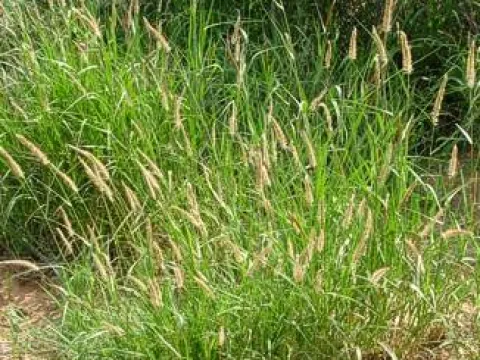
Cenchrus hohenackeri
Cenchrus hohenackeri
Cenchrus hohenackeri is a perennial grass species of the Poaceae family, recognized for its adaptability to challenging climatic conditions in arid agricultural zones.
What the section contains
Cenchrus hohenackeri
Sowing is typically performed in the spring, once the soil temperature is consistently high enough to support rapid germination and initial seedling establishment.
The optimal planting pattern involves row spacing between 30 and 45 cm, which provides the necessary room for the plant's robust root system and tiller development.
Seeds should be planted at a shallow depth of 1–2 cm, as the seeds are small and require good contact with the seedbed to ensure uniform emergence across the field.
Post-seeding rolling is recommended to firm the soil surface, ensuring adequate moisture retention and improved seedling vigor during the early growth stages.
This species is highly drought-tolerant and heat-resistant, making it a viable option for forage production in regions with limited rainfall and high temperatures.
While adaptable to various soil types, it thrives best in light, well-aerated sandy or loamy soils that prevent waterlogging and promote deep root penetration.
Cenchrus hohenackeri requires full sunlight for optimal biomass production; shade or high-density sowing can significantly inhibit its photosynthetic efficiency.
Fertilization management, particularly the application of nitrogen, is crucial during the active growth phases to boost yield and support the plant's metabolic demands.
The crop is sensitive to poor drainage and waterlogged conditions, so careful site selection is necessary to ensure long-term stand productivity and plant health.
The primary use of this crop is in forage production, providing high-quality biomass for hay, silage, or grazing in semi-arid and tropical agricultural environments.
Its ability to rapidly regenerate after cutting allows for multiple harvests throughout the growing season, contributing to overall high seasonal yield.
Nutritional value peaks before the flowering phase; delaying the harvest beyond this stage results in increased crude fiber and decreased protein concentration.
Yield stability is one of the main advantages of Cenchrus hohenackeri, making it a preferred choice for establishing perennial pastures in diverse farming systems.
Efficient management practices, including appropriate irrigation during dry spells, can significantly enhance the quantity and quality of the harvested feed.
Common agricultural threats include fungal diseases such as rust and smut, which typically proliferate in conditions of excessive atmospheric humidity.
Pests such as grass-feeding insects and various mites may affect young stands, requiring regular monitoring and timely intervention to maintain crop vigor.
Weed competition during the establishment phase is a significant concern, as young seedlings require protection from aggressive annual weeds for optimal growth.
Implementing a proper crop rotation strategy and maintaining optimal plant density can reduce the incidence of pests and diseases in the field.
Using certified seed and adopting integrated pest management (IPM) practices significantly lowers the reliance on synthetic chemicals for crop protection.
The ideal harvest window is the booting stage, which ensures a balanced composition of digestible nutrients, essential minerals, and adequate protein levels.
When producing hay, mowing should be followed by proper wilting in windrows to preserve the leaf tissue and maintain the nutritional integrity of the forage.
Silage production requires chopping the plant material to facilitate effective compaction in silos, creating an anaerobic environment for optimal fermentation.
The height of the cut must be carefully managed to avoid damaging the crown of the plant, which is essential for rapid recovery and subsequent regrowth.
Following strict harvest timelines is critical to prevent the grass from becoming overly lignified, which would reduce palatability and overall digestibility for livestock.