
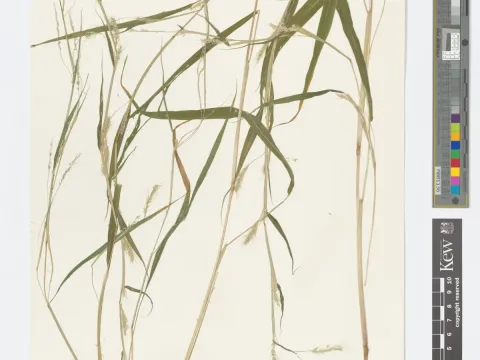
Cenchrus nubicus
Cenchrus nubicus
Cenchrus nubicus is a resilient perennial grass of the Poaceae family, widely recognized for its adaptability in arid and semi-arid environments. Sowing should be timed to follow the onset of the rainy season or when soil temperatures consistently reach 20°C or above to ensure rapid germination.
What the section contains
Cenchrus nubicus
Given the small size of the seeds, planting depth must be kept shallow, ideally between 1 and 2 centimeters. Placing seeds too deep often results in failure to emerge, as the energy reserves in the seed are insufficient to push the sprout through a thick layer of soil.
Optimal sowing patterns typically involve rows, which facilitate weed control and maintenance during the early stages of growth. Because the seedlings develop slowly, maintaining a weed-free seedbed during the first few weeks is crucial for establishment.
Seed density should be adjusted based on local moisture availability; in drier regions, lower seeding rates reduce competition for limited water. Using high-quality, viable seeds is essential for ensuring a uniform stand across the field.
Once planted, firming the soil with a light roller helps improve seed-to-soil contact. This practice is particularly beneficial in sandy soils, where moisture retention is already a challenge, ensuring the seedling can access groundwater quickly.
This crop is highly prized for its ability to thrive in poor, sandy, and infertile soils where other agricultural crops would struggle. It exhibits a remarkable tolerance for saline conditions, making it an excellent candidate for land reclamation projects.
Proper drainage is the single most important soil requirement for Cenchrus nubicus. It does not tolerate waterlogging, as saturated roots quickly succumb to fungal rot and lack of oxygen, leading to the rapid decline of the crop.
Cenchrus nubicus is a heliophilic plant that demands full exposure to sunlight. Shaded areas significantly inhibit growth and reduce the biomass yield, so it should only be planted in open, clear areas that receive maximal solar radiation.
The plant is exceptionally heat-tolerant, capable of maintaining its physiological processes under extreme desert or tropical temperatures. During prolonged droughts, it effectively enters a state of dormancy to survive until the next rain.
While it is a hardy species, nitrogen supplementation can significantly boost vegetative yield, particularly when there is adequate moisture. Fertilization strategies should be balanced to favor leaf production over excessive stem development.
The yield of Cenchrus nubicus is highly dependent on water availability and the frequency of rainfall throughout the growing season. In optimal conditions, the crop supports multiple harvests per year, providing a consistent supply of forage.
Average yields of dry matter typically range from 2 to 5 tons per hectare under rain-fed conditions. With the addition of supplementary irrigation, these figures can be significantly improved, allowing for more intensive production.
The nutritional value is highest when the plant is harvested during the early heading stage. During this phase, the ratio of protein to fiber is ideal, making the harvested hay highly digestible for sheep, goats, and cattle.
A key feature of this grass is its strong regenerative ability after cutting or grazing. This persistence allows for long-term use of the same plot, provided that the management of the cutting height prevents damaging the crown of the plant.
During the peak of the dry season, the crop serves as a vital green forage option. By managing the harvest cycles carefully, farmers can ensure a high-quality food source that helps maintain livestock health during lean months.
Excessive humidity poses a major risk, as it often encourages the development of foliar fungal diseases. Powdery mildew can affect the leaf surface, reducing the photosynthetic efficiency and overall biomass of the plant.
Rust diseases are also known to affect Cenchrus species. Management involves selecting resistant cultivars and ensuring adequate air circulation through appropriate row spacing to prevent the micro-climate from becoming too humid.
Insect pests, particularly locusts and grasshoppers, can cause catastrophic damage if not monitored. Early detection and the application of targeted insecticides during an outbreak are necessary to preserve the crop's integrity.
Root-knot nematodes may cause stunted growth in sandy soils. Implementing crop rotation cycles helps reduce the concentration of these soil-borne pests, protecting the root systems and maintaining the vigor of the grass stand.
Adhering to proper grazing management is also a form of protection. Overgrazing weakens the plants, making them more susceptible to disease and competition from invasive weeds, which can eventually lead to the loss of the stand.
Harvesting for hay should be carried out at the heading phase, before the plants produce excessive lignified stems. Timely harvesting is critical for maintaining high crude protein content and preventing the buildup of unpalatable fibers.
In rotational grazing systems, cattle should be moved to new paddocks once the grass is grazed to a specific height. Leaving behind enough stubble is essential for the plant to quickly recover and restart its growth cycle.
Seed harvesting requires precision, as the seeds are small and prone to shattering upon full maturity. Harvesting should be performed when the seed heads show a distinct color change, using machinery that minimizes seed loss.
After cutting, the grass should be dried thoroughly to reach a moisture level suitable for safe storage. In high-humidity environments, mechanical drying or forced aeration is recommended to prevent the development of mold within baled hay.
Stored hay should be kept in a dry, ventilated area to preserve its nutritional quality. Properly cured Cenchrus hay is a highly valued product, providing essential roughage for livestock during winter and dry periods.