
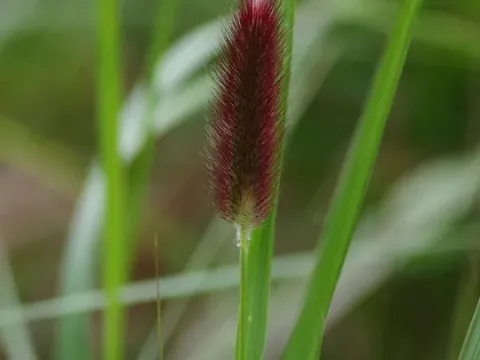
Cenchrus geniculatus
Cenchrus geniculatus
Cenchrus geniculatus is a hardy perennial grass species within the Poaceae family, widely recognized for its adaptation to arid and semi-arid environments.
What the section contains
Cenchrus geniculatus
Sowing should ideally occur when soil temperatures stabilize, providing the necessary thermal energy to trigger rapid seed germination and emergence.
Due to the small size of the seeds, shallow planting at a depth of 1 to 2 centimeters is critical to ensure successful establishment and prevent depletion of seed energy reserves.
Proper field preparation involves creating a firm seedbed, often followed by light rolling to optimize soil moisture transfer to the germinating seeds.
The seeding rate must be balanced based on local fertility levels to achieve an optimal stand density that facilitates robust root development from the start.
This grass species demonstrates exceptional drought tolerance, thriving in sandy and low-fertility soils where conventional forage crops often fail.
Full solar exposure is mandatory for Cenchrus geniculatus, as it does not compete well in shaded areas and thrives under intense sunlight.
The plant performs best in neutral to slightly alkaline, well-drained soils, showing a strong intolerance to prolonged waterlogging or anaerobic soil conditions.
While naturally robust, strategic application of nitrogen fertilizers during the early vegetative stage can significantly boost biomass accumulation and nutritional value.
It is well-adapted to high-temperature regimes, making it an excellent candidate for regions experiencing extreme summer heat and irregular rainfall patterns.
The primary use of Cenchrus geniculatus is as a high-quality forage source for livestock, particularly in grazing systems where resilience is prioritized.
Productivity is highly dependent on effective pasture management, including rotation cycles that allow the grass to recover effectively between grazing events.
The crop offers good nutritional density if harvested before the stalks become lignified, ensuring higher palatability and digestibility for the animals.
Yields can be maximized by avoiding continuous overgrazing, which allows the root system to maintain the necessary carbohydrate stores for rapid regrowth.
When used as a hay crop, timing the harvest during the late booting phase captures the best balance between vegetative yield and forage quality.
The crop is susceptible to various rust diseases under high humidity conditions, which can decrease both the quality and quantity of the forage produced.
Pest pressure from cereal flies and stem borers can impact early development, requiring active monitoring during the first few weeks of the growing season.
Weed competition is a significant threat to young stands, necessitating effective weed control methods during the initial establishment phase of the crop.
Fungal pathogen outbreaks can often be mitigated by maintaining adequate spacing and ensuring good airflow across the field to prevent moisture accumulation.
Integrated pest management strategies are recommended to keep damage below economic thresholds without disrupting the local agricultural ecosystem.
For high-quality hay, the harvest must be timed precisely during the early heading stage to maintain the nutritional integrity of the leaf and stalk matter.
Efficient drying processes are vital; minimizing the duration between cutting and baling prevents nutrient loss and protects the crop from environmental degradation.
Managing the stubble height during grazing or mechanical harvesting is essential to encourage basal regrowth and improve the long-term vigor of the perennial stand.
Seed harvest is performed using direct combining when the seed heads demonstrate mature coloring and the seeds reach the hard dough stage of development.
Post-harvest handling requires immediate moisture reduction in seeds through controlled drying to ensure storage longevity and prevent mold growth in bins.