
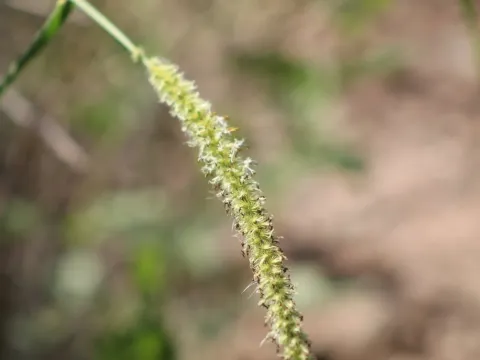
Cenchrus myosuroides
Cenchrus myosuroides
Sowing Cenchrus myosuroides should ideally occur during the spring season when soil temperatures reach 15–18 degrees Celsius. Timing is critical to ensure stable growth and to avoid potential damage from late spring frosts, which can inhibit germination.
What the section contains
Cenchrus myosuroides
Seed planting depth should be maintained between 1 to 2 centimeters to provide the best balance between protection and emergence. Shallow planting is often risky as it exposes seeds to rapid drying in arid conditions, which is common in its natural range.
When establishing this crop for pasture or hay, maintaining proper seeding rates is essential for achieving a balanced stand density. Overcrowding can lead to resource competition for light and water, ultimately reducing the total yield per hectare.
Implementing a rolling practice after seeding helps improve moisture capillary action in the soil, promoting better contact between seeds and the soil surface. Utilizing precision planters ensures an even distribution of seeds across the field.
A primary success factor is the absence of weed competition during the critical first month of growth. It is highly recommended to select fields that have been cleaned of weeds or to apply pre-emergent herbicide measures to provide a clear establishment zone.
Cenchrus myosuroides is a heat-loving perennial grass belonging to the Poaceae family. The plant thrives in well-illuminated environments, as shade significantly hinders its tillering capacity and slows down overall developmental speed.
This crop exhibits strong drought tolerance, making it an excellent candidate for agricultural production in regions with limited rainfall. It displays high adaptability, even in nutrient-poor sandy soils where other grain crops often fail to produce satisfactory yields.
The ideal soil profile for this grass consists of light sandy loam or loamy textures that offer superior aeration and natural drainage. It is highly intolerant of waterlogging and acidic, boggy soils, which should be avoided when site selecting.
Temperature optimization for vegetative growth occurs in the 25–30 degrees Celsius range. Furthermore, the species demonstrates a high tolerance to intense solar radiation and long periods of direct sunlight characteristic of high-latitude or semi-arid summers.
Mineral fertilizer applications, particularly nitrogen, contribute significantly to total vegetative biomass production. Adjusting soil pH to a neutral level is recommended, as high acidity tends to suppress the expansive development of its root system.
The yield of Cenchrus myosuroides is largely determined by the frequency of cutting cycles and the management of soil nutrition. Under optimal conditions, the crop is capable of producing multiple harvests within a single growing season.
Maximum nutritional yield is obtained during the active tillering phase prior to the onset of the heading phase. Harvesting at this developmental stage ensures that the dry matter contains the highest possible protein and mineral density for livestock.
Yield metrics increase substantially under irrigation compared to rain-fed cultivation. Supplemental watering allows the crop to fully realize its biomass potential, often enabling additional harvest cycles in the second half of the summer.
For pasture use, the grass shows excellent regrowth capabilities after heavy grazing. Its ability to recover quickly makes it a highly valuable component in pasture mixtures, particularly in arid climates where grazing pressure is high.
Biomass totals vary depending on soil fertility and climate, ranging from moderate to high outputs. Management must prioritize harvesting before the stems harden, as the transition into the reproductive phase drastically lowers forage quality.
Cenchrus myosuroides naturally possesses a strong resilience against most common grass pathogens. However, during periods of prolonged high humidity, there is a risk of fungal infections such as powdery mildew or rust.
Agricultural pests, such as cereal flies, can pose risks during the early establishment phase of the crop. Regular phytosanitary monitoring is essential to identify early outbreaks and implement corrective measures before the damage becomes significant.
Aphid populations may also colonize young shoots during hot weather. If infestations become severe, systemic insecticides approved for use on forage crops can be applied, provided that pre-grazing waiting periods are strictly observed.
Special attention should be directed toward weed management in the early developmental stages. Selective herbicides can effectively assist the crop in outcompeting weeds, allowing it to establish a dense and resilient canopy.
The innate biological robustness of the species helps minimize the need for chemical intervention. Strategic crop rotation and proper site management are generally sufficient to prevent the buildup of soil-borne pathogens over time.
Harvesting for green mass should commence at the onset of inflorescence emergence. This stage represents the biological peak where protein and mineral levels are highest, ensuring maximum nutritional value for livestock feed.
When preparing hay, rapid drying of the harvested mass is essential to maintain feed quality. Exposure to rainfall or prolonged damp conditions in the field significantly degrades the final product, leading to nutrient loss.
Seed harvesting should be performed at full maturity, when the caryopses develop their characteristic color and readily detach from the stalks. Timely harvesting is required to minimize losses caused by grain shattering due to wind.
To reduce post-harvest seed losses, equipment should be fitted with specialized headers. Careful calibration of drum speed during harvesting helps prevent damage to seed coats, preserving high germination rates for future planting cycles.
Post-harvest, seeds require cleaning and drying to reach a moisture content of 12-14%. Proper storage in a cool, dry, and well-ventilated facility prevents self-heating and ensures long-term viability of the seed material.