
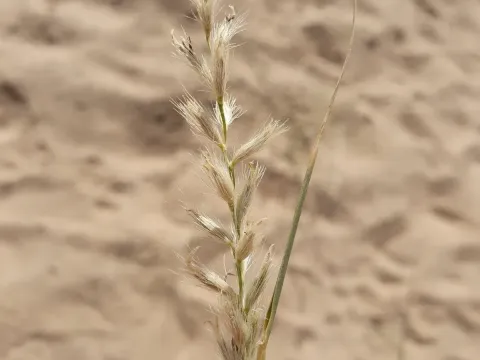
Cenchrus divisus
Cenchrus divisus
Cenchrus divisus is a member of the Poaceae family. This perennial grass is native to arid and semi-arid regions of Africa and Asia, where it has adapted to survive in harsh environmental conditions.
What the section contains
Cenchrus divisus
The plant is highly valued for its extreme drought tolerance. It features a deep-reaching, robust root system that enables it to extract moisture from the soil profile during prolonged dry spells.
Soil requirements for optimal growth involve well-drained substrates, ideally sandy or loamy soils. The species is notably tolerant of moderately saline conditions, making it suitable for land reclamation.
Climatic preferences include high solar radiation and consistently warm temperatures. Unlike temperate forage grasses, Cenchrus divisus thrives in intense heat and requires ample light to reach its maximum biomass potential.
Agricultural use focuses primarily on livestock grazing. The plant is resilient to heavy grazing pressure and exhibits vigorous regrowth, which helps maintain soil stability and forage availability in semi-desert environments.
The primary diseases affecting this crop are fungal rusts, which become problematic when local humidity levels rise or if the soil drainage is inadequate for the plant's needs.
Insect pests include various species of grasshoppers that can significantly reduce leaf density. These outbreaks are usually cyclical and require systematic monitoring during the peak growing season.
Seedling establishment can be negatively impacted by soil-dwelling pests such as wireworms, which target the emerging roots during the early developmental phases of the plant.
Occasional infestations of powdery mildew may occur in dense stands with poor air circulation, necessitating improved management of plant spacing and density.
Effective management strategies emphasize the importance of maintaining plant vigor, as healthy stands of Cenchrus divisus are naturally more resistant to pest and disease pressure.