
Cenchrus
Cenchrus x Megathyrsus
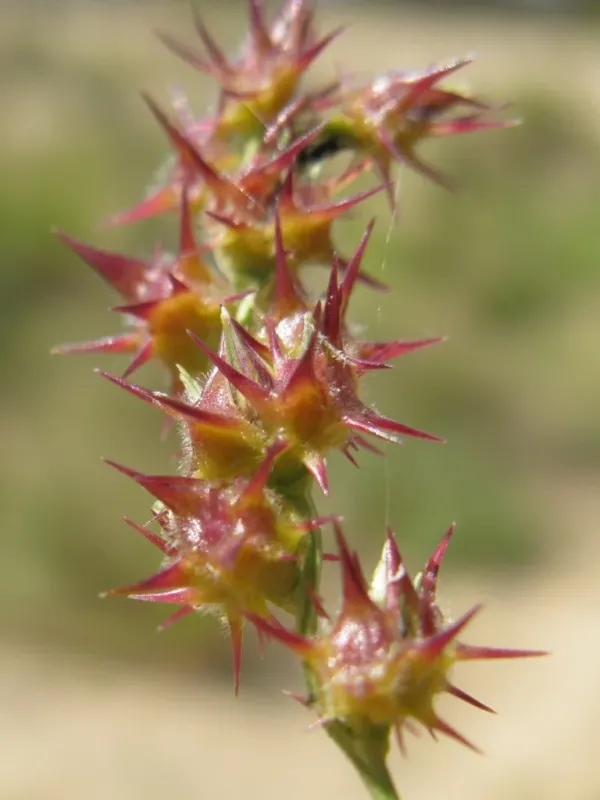
Description
Sowing dates
Sowing Cenchrus is recommended at the end of spring when the soil at the seeding depth warms up to 15–18 degrees Celsius. It is crucial to wait for stable warm weather, as the crop is sensitive to low temperatures during its initial growth phases.
The seeding depth should be 2–3 centimeters in heavy soils and up to 4 centimeters in light sandy substrates. Excessive depth significantly reduces germination energy and leads to sparse emergence.
The optimal seeding rate for row planting is 10–12 kilograms per hectare. For seed production, a wide-row method with spacing of 45–60 centimeters is used, which allows for effective inter-row cultivation.
After sowing, it is necessary to roll the soil to improve seed-to-soil contact and ensure moisture availability. This is a critical agricultural practice for all millet-type grasses to which this crop belongs.
Seedlings appear 10–14 days after sowing, depending on moisture levels. It is not recommended to allow a soil crust to form before emergence; light harrowing across the rows may be performed if necessary.
Growing requirements
Cenchrus belongs to the Poaceae family and is a typical warm-climate plant. It is highly demanding in terms of light and temperature, developing successfully only when the sum of active temperatures exceeds 2500 degrees.
The crop possesses exceptional drought tolerance due to a deep root system and the specific structure of its leaves. It can withstand long periods without rainfall without a significant decrease in biological activity.
It prefers light, well-aerated sandy and loamy soils with a neutral pH. The plant does not tolerate waterlogging or acidic swampy soils, which slow down development and may lead to root system decay.
The crop responds well to nitrogen fertilizers, especially during the intensive tillering phase. Phosphorus and potassium fertilizers should ideally be applied during primary soil cultivation to create an optimal nutrient reserve.
In crop rotation, Cenchrus is an excellent predecessor for most cereal and vegetable crops, as it helps improve soil structure. It effectively prevents soil erosion thanks to the dense sod formed by its powerful root system.
Yield
The green mass yield of Cenchrus in favorable conditions reaches 300–450 centners per hectare. The results depend significantly on the level of mineral nutrition and the number of cuttings per growing season.
For hay production, the dry mass yield is 80–120 centners per hectare. It is important to mow the plants before the stems become coarse, as nutritional value decreases in the heading phase due to lignin accumulation.
Maximum productivity is observed in the second and third years after sowing when the plants are fully adapted to the site. In subsequent years, fertilization is necessary to maintain high forage productivity.
Seed productivity of the crop reaches 5–8 centners per hectare under strict adherence to agricultural practices. An important factor is the uniformity of seed ripening in the inflorescences, which requires monitoring of harvest timing.
Using Cenchrus in pastures ensures stable livestock weight gain, as the grass is highly palatable at a young age. In grass mixtures, the crop can be utilized for up to 5–7 years, provided that overgrazing is avoided.
Main diseases and pests
The main diseases of Cenchrus are fungal infections such as rust and various types of smut. High humidity and dense plantings, which hinder air circulation, promote the development of these infections.
Among pests, the greatest threat is posed by cereal flies and aphids, which damage young shoots. These injuries lead to plant deformation and a significant decrease in green mass yield.
Disease management includes agricultural practices: crop rotation, the use of healthy planting material, and timely weeding. Fungicide application is only used during massive outbreaks of infection.
Preventive measures are effective against pests, including treating seeds with systemic insecticides before sowing. On industrial fields, approved systemic insecticides are utilized when necessary.
Particular attention should be paid to weed control in the first year of vegetation, as Cenchrus grows slowly. Competition with weeds at the initial stage can lead to the loss of a significant portion of the crops.
Harvesting
Harvesting green mass for fodder is carried out at the beginning of the plant's flowering phase. This period achieves the optimal balance between harvest volume and the content of nutrients, especially proteins and sugars.
For hay production, mowing is performed in dry weather, ensuring fast wilting in windrows. Using tedders allows for uniform drying of the grass, preserving its nutritional value and color.
When producing hay, it is necessary to monitor the moisture content before baling, which should not exceed 15–17%. This prevents mold development during storage and potential spontaneous combustion of bales in closed buildings.
Seed harvesting is conducted when the lower part of the panicles turns brown. Since Cenchrus seeds are prone to shedding at full maturity, it is important not to delay, conducting operations as quickly as possible.
After seed harvesting, stubble residues can be used for supplementary livestock feeding or plowed into the soil as organic fertilizer. The crop's residues decompose quickly, enriching the topsoil layer with organic matter.