
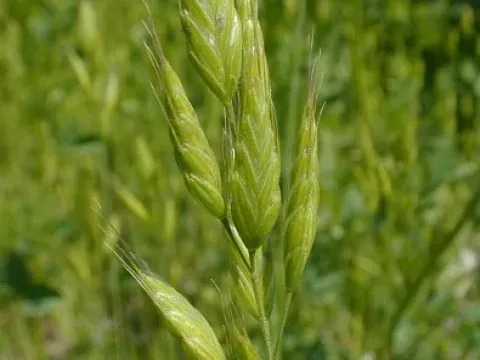
Bromus pseudothominii
Bromus pseudothominii
Bromus pseudothominii is a valuable perennial grass species belonging to the Poaceae family, widely recognized for its robust growth and utility in permanent grassland setups.
What the section contains
Bromus pseudothominii
The optimal sowing time is early spring, which allows the seedlings to establish a strong root system before the onset of summer drought. Autumn sowing is also a viable option in regions with mild winter climates.
Seeds should be planted at a shallow depth, approximately 2 to 3 centimeters, ensuring good soil-seed contact through rolling. This practice is essential for uniform germination and early plant development.
A seeding rate of 15–20 kilograms per hectare is standard for creating dense, productive swards. It can be successfully interseeded with legumes to enhance the overall protein content of the forage.
In the establishment phase, the crop exhibits slow initial growth. Proper weed control during this period is necessary to ensure the crop has sufficient access to nutrients and light.
This grass thrives in moderate moisture conditions and is adaptable to various soil types, though it performs best on fertile loamy or chernozem soils with neutral pH levels.
The species is highly frost-tolerant and winter-hardy, making it a reliable choice for cold climate agriculture where other forage grasses might struggle during winter months.
Bromus pseudothominii requires full sun to reach its full yield potential. Shade reduces its vigor and impacts the quality and quantity of biomass harvested.
It prefers well-drained soils but can withstand periodic short-term waterlogging, which is a common occurrence in lowland meadows during spring floods.
Consistent nitrogen fertilization is key to maintaining high productivity. Applying fertilizers after the first harvest significantly boosts regrowth for subsequent cuts during the season.
Like many species in the Bromus genus, it is susceptible to powdery mildew and various rust diseases that can reduce foliage quality if environmental conditions are overly humid.
Cereal flies and aphids are the most common pests that can impact field performance, especially during the vegetative stage when the crop is most succulent.
Good management practices, including timely harvesting, play a major role in disease prevention by breaking the reproductive cycles of common grass-related pathogens.
Maintaining a healthy, dense sward through balanced fertilization and correct grazing intervals helps the crop outcompete weeds and resist secondary infections.
Monitoring for signs of infestation in early spring is recommended to prevent localized outbreaks from spreading throughout the entire forage field.