
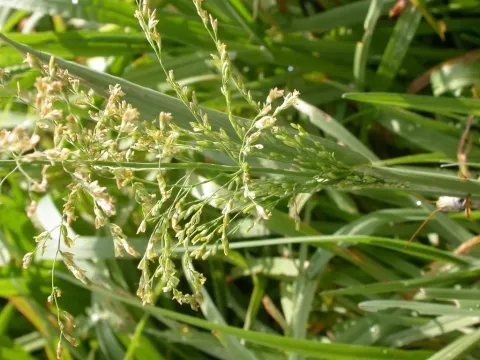
Brookgrass
Catabrosa
Brookgrass (Catabrosa) is a genus of perennial grasses within the Poaceae family. It is recognized for its preference for saturated environments, making it a specialized plant for wetland agriculture and riparian management.
What the section contains

Brookgrass
Botanically, these grasses are characterized by their soft, succulent foliage and creeping stems that can root at the nodes. This morphological adaptation allows the plant to form dense mats, which is highly beneficial for soil stabilization in waterlogged areas.
The crop thrives in temperate climates and requires consistent soil moisture to maintain vegetative growth. Unlike traditional cereal crops, it relies on high water tables and can tolerate periods of partial submergence, which prevents root rot in environments where other grasses would fail.
Regarding soil requirements, brookgrass prefers nutrient-rich, silty or clayey soils found in floodplains. It is not adapted to drought, and productivity significantly decreases if the water source is removed during the active growing season.
Economically, brookgrass is utilized primarily as a forage crop. Because of its palatable and nutritious nature, it serves as an excellent constituent for grazing livestock, contributing to the biodiversity and yield of wetland pastures.
The main threats to brookgrass health include fungal pathogens such as rusts and leaf spots, which thrive in the humid, stagnant-air conditions common to its natural habitat. Proper site management is essential to prevent these outbreaks.
Insect pests include various species of stem-borers and foliage-feeding larvae that are common in wetland ecosystems. Maintaining a healthy balance in the local ecosystem and avoiding overgrazing helps to mitigate the negative impact of these pests.