
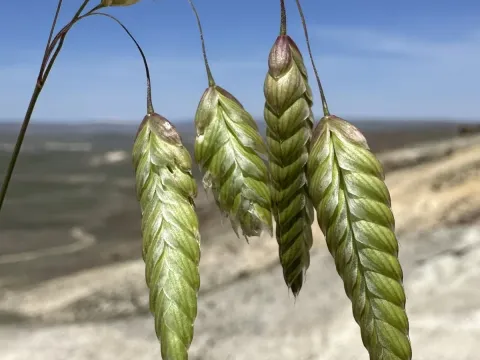
Bromus briziformis
Bromus briziformis
Bromus briziformis, commonly known as rattle brome, is an annual grass species belonging to the Poaceae family. Sowing is typically performed in early spring as soil temperatures reach 10–12 degrees Celsius.
What the section contains
Bromus briziformis
A seed rate of approximately 10–15 kg per hectare is recommended for field cultivation. The seeds should be planted at a shallow depth of about 2 centimeters to ensure rapid germination.
Optimal results are achieved in well-prepared, firm seedbeds. Light rolling after sowing is recommended to improve seed-to-soil contact, which is crucial for early root establishment.
The species exhibits rapid early growth, allowing it to establish itself quickly before the onset of summer drought. Row spacing should be maintained at 15–20 centimeters for best yield results.
In ornamental garden applications, it can also be sown in autumn, allowing the seeds to germinate early in the following spring as soon as conditions become favorable.
This grass thrives in well-drained soils, ranging from sandy loams to heavier clays, provided there is no long-term waterlogging. It is tolerant of neutral to slightly alkaline pH levels.
Bromus briziformis is notably drought-tolerant once established. Its ability to thrive in dry, sun-exposed sites makes it a valuable species for ecological restoration and forage in arid climates.
Full sunlight is essential for optimal development and the production of its characteristic drooping, rattle-like inflorescences. Shaded areas lead to weak stems and poor seed production.
While not overly demanding, a moderate application of nitrogen fertilizer at the start of the tillering phase will significantly enhance biomass production and overall plant health.
Excessive moisture or poor drainage is the primary limiting factor for this crop. Sites prone to standing water should be avoided to prevent root rot and plant mortality.
The crop is susceptible to common grass pathogens such as rust and powdery mildew, especially during periods of high humidity and poor air circulation within the canopy.
Insects like aphids and various cereal flies can cause damage to the foliage and developing inflorescences. Monitoring during the early spring growth flush is essential for integrated pest management.
Good agricultural practices, such as proper crop rotation and avoiding overly dense plantings, are the most effective ways to minimize the impact of pests and diseases.
Using certified, disease-free seeds significantly reduces the risk of introducing pathogens into the field. If infection occurs, targeted fungicidal sprays can be utilized to prevent economic loss.
Balanced fertilization helps the plants maintain natural resistance. Over-fertilization with nitrogen can create lush, succulent growth that attracts pests and increases disease vulnerability.
For forage purposes, the harvest should take place at the early flowering stage to capture the highest nutritional value. Delaying the harvest reduces protein content as the plant matures.
For ornamental or seed production, the inflorescences should be harvested when they have turned a distinct golden-brown color but before the seeds begin to shatter spontaneously.
The harvested forage must be dried thoroughly in the field. Turning the windrows ensures uniform moisture reduction and helps maintain the green color and nutritional profile of the hay.
Seed harvesting should be conducted with precision settings on the combine harvester to avoid crushing the seeds. Proper screening is necessary to remove chaff and impurities from the final sample.
Store the harvested seed in cool, dry, and rodent-proof facilities. Maintaining low humidity in storage is the key to preserving seed viability for subsequent planting seasons.