
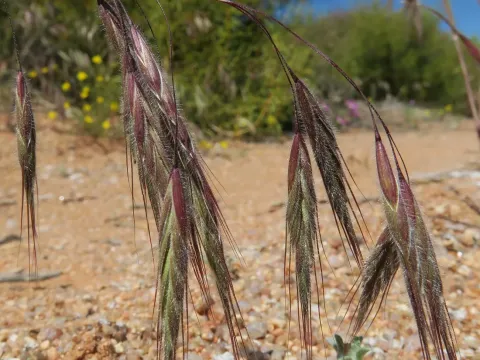
Bromus adoensis
Bromus adoensis
Bromus adoensis belongs to the Poaceae family and is recognized as a hardy forage grass species suitable for various temperate agricultural environments.
What the section contains
Bromus adoensis
Sowing should be performed in early spring or during the autumn months to ensure optimal soil moisture levels, which are critical for the germination of its seeds.
The recommended seeding depth is approximately 2 to 3 centimeters, ensuring that seeds are covered well enough to retain moisture but not buried too deeply.
For uniform establishment, it is essential to use high-quality, certified seeds and to ensure good soil-to-seed contact by rolling the field post-seeding.
Seeding rates are typically determined by the intended use; higher densities are preferred for dense pasture grazing to minimize weed competition.
The plant thrives in well-drained soils, showing a preference for loamy textures that provide adequate aeration for the root system to develop fully.
Bromus adoensis demonstrates significant cold tolerance, making it an excellent choice for regions characterized by cold winters and moderate frost events.
Although it is moderately drought-resistant, optimal biomass production is achieved under conditions of consistent rainfall or supplemental irrigation during the growth season.
Light intensity plays a key role in the development of this grass, as it performs best in open, full-sun environments without excessive canopy shading.
Soil nutrient status should be managed with nitrogen and phosphorus applications to support high vegetative yield and improve the overall longevity of the stand.
The primary agricultural use of Bromus adoensis is for forage production, where it serves as a reliable component of hay meadows and grazing pastures.
The grass provides a consistent source of nutrients for livestock when harvested at the appropriate growth stage, offering a balance of protein and fibers.
- High nutritional quality during the boot stage
- Excellent regrowth potential after mechanical cutting
- Adaptability to long-term perennial forage systems
Yield stability is maintained by proper rotational grazing, which prevents overgrazing and encourages deeper root development during the summer months.
Farmers value this species for its ability to produce substantial green matter, which can be stored as silage or dried hay for winter feeding programs.
Rust fungi represent a major threat, particularly in humid climates, as they can rapidly spread through the leaves and reduce the total forage quality.
Powdery mildew may occur in dense or poorly ventilated stands, leading to chlorosis and potential yield losses if left untreated by fungicides.
Insect pests such as cereal flies may cause damage during the seedling phase, potentially resulting in thin stands if not monitored during early growth.
Integrated pest management strategies, including crop rotation and timely mowing, are essential to minimize the need for heavy chemical intervention.
Maintaining a healthy, balanced soil profile through proper fertilization helps the plants withstand biotic stressors and recover more effectively from attacks.
Harvesting for high-quality hay should be conducted at the early heading stage to maximize the concentration of proteins and digestible nutrients.
When producing seeds, the harvest window is narrow and must be timed to avoid significant shattering losses that occur as the seeds reach full maturity.
Standard mowing equipment is effective, with cutting height adjusted to 5–7 centimeters to allow the plant to recover and produce a second yield cycle.
Drying the harvested material in well-aerated windrows is vital to prevent fungal growth or spoilage during the post-harvest curing phase of haymaking.
Efficiency in the harvest cycle directly correlates with the overall profitability of the crop, especially in operations aiming for multiple yearly harvests.