
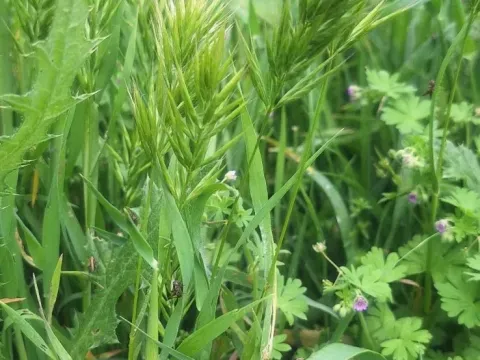
Broom brome
Bromus scoparius
Broom brome (Bromus scoparius) is a member of the Poaceae family. This annual grass species is native to Eurasia and is often found in pastures and disturbed habitats where it plays a role in forage production.
What the section contains
Broom brome
Botanically, it is characterized by its compact, broom-like panicles that give the plant its distinctive appearance. The stems are typically erect, reaching heights suitable for grazing or light forage harvesting.
The plant has specific requirements for soil conditions, thriving in well-drained, sandy, or rocky substrates. It exhibits strong resilience to nutrient-poor soils, making it suitable for marginal agricultural land.
Regarding climate, it is well-adapted to Mediterranean-type climates with cool, wet winters and hot, dry summers. It completes its lifecycle early to avoid the peak heat of summer, ensuring its survival.
Its primary agricultural use is as forage for livestock. Being an early-season grower, it provides essential green biomass when other perennial species might still be dormant or just emerging.
Rust diseases (Puccinia species) are a common threat to this grass, particularly in humid regions. These pathogens form pustules on the leaves, significantly reducing the grazing quality of the foliage.
Powdery mildew is another widespread fungal issue that thrives in stagnant air conditions. Improving field drainage and plant density management are effective strategies for reducing its incidence.
Aphids represent a primary insect threat, feeding on sap and often acting as vectors for plant viruses. Early season monitoring is recommended to determine the impact on biomass growth.
Cereal leaf beetles can damage the leaves by eating longitudinal strips of tissue, which can stress the plant and reduce its ability to recover after grazing.
Root-knot nematodes can impact the overall health of the root system, leading to stunted growth. Crop rotation is the most effective way to prevent the build-up of these soil-borne pests in infested fields.