

Reference · Crops
Brome
Bromus L.
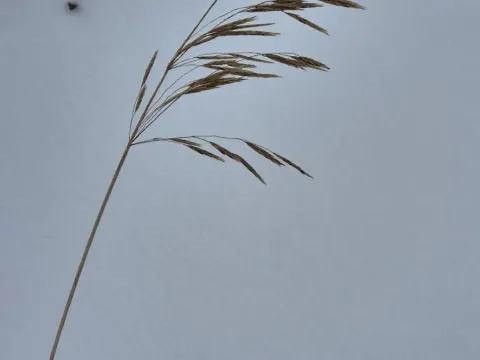
Brome grass (genus Bromus) is a perennial member of the Poaceae family. Sowing is typically carried out in early spring or late summer to allow seedlings to establish a strong root system before facing environmental stress.
25
items
What the section contains
 Smooth brome
Bromus inermis Leyss.
12 products
Smooth brome
Bromus inermis Leyss.
12 products
 Smooth brome
Bromus catharticus Vahl var. catharticus
5 products
Smooth brome
Bromus catharticus Vahl var. catharticus
5 products
 Barren brome
Bromus sterilis L.
Bieberstein brome
Bromus biebersteinii Roem. & Schult.
Barren brome
Bromus sterilis L.
Bieberstein brome
Bromus biebersteinii Roem. & Schult.
 Bromus auleticus
 Trin.
Bromus auleticus
Bromus auleticus Trin.
 Bromus coloratus
 Steud.
Bromus coloratus
Bromus coloratus Steud.
 Bromus commutatus
 Schrad.
Bromus commutatus
Bromus commutatus Schrad.
 Cheatgrass
Bromus tectorum L.
Cheatgrass
Bromus tectorum L.
 Chess brome
Bromus secalinus L.
Chess brome
Bromus secalinus L.
 Field brome
Bromus arvensis L.
Field brome
Bromus arvensis L.
 Great brome
Bromus diandrus Roth
Great brome
Bromus diandrus Roth var. rigidus (Roth) Sales
Great brome
Bromus diandrus Roth
Great brome
Bromus diandrus Roth var. rigidus (Roth) Sales
 Meadow brome
Bromus riparius Rehmann x B. inermis Leyss
Meadow brome
Bromus riparius Rehmann x B. inermis Leyss
 Mountain brome
Bromus carinatus Hook. & Arn.
Mountain brome
Bromus carinatus Hook. & Arn.
 Mountain brome
Bromus marginatus Nees ex Steud.
Parodi brome
Bromus parodii Covas & Itria
Rescue grass
Bromus catharticus Vahl
Rescue grass
Bromus catharticus Vahl var. elatus (E. Desv.) Planchuelo
Rescue grass
Bromus catharticus Vahl var. rupestris (Speg.) Planchuelo & P. M. Peterson
Mountain brome
Bromus marginatus Nees ex Steud.
Parodi brome
Bromus parodii Covas & Itria
Rescue grass
Bromus catharticus Vahl
Rescue grass
Bromus catharticus Vahl var. elatus (E. Desv.) Planchuelo
Rescue grass
Bromus catharticus Vahl var. rupestris (Speg.) Planchuelo & P. M. Peterson
 Sitka brome
Bromus sitchensis Trin.
Sitka brome
Bromus sitchensis Trin.
 Smooth brome (coastal type)
Bromus riparius Rehmann
Smooth brome (coastal type)
Bromus riparius Rehmann
 Soft brome
Bromus hordeaceus L.
Soft brome
Bromus hordeaceus L.
 Soft brome
Bromus racemosus L.
Soft brome
Bromus racemosus L.
 Upright brome
Bromus erectus Huds.
Upright brome
Bromus erectus Huds.
 Velvet brome
Bromus subvelutinus Shear
Velvet brome
Bromus subvelutinus Shear
Marketplace
Products in this section · 12


Brome
The optimal planting depth ranges from 1.5 to 3 centimeters, depending on soil texture and moisture levels. Firming the soil after seeding is recommended to ensure optimal seed-to-soil contact for uniform germination.
The seeding rate for pure brome grass stands is approximately 15–20 kilograms per hectare. When used in forage mixtures with legumes, the rate should be adjusted downward to maintain balanced competition.
Thorough seedbed preparation is necessary to remove weeds and provide a smooth, level surface. As brome grass establishes slowly during its first year, controlling weed competition is crucial during the initial growth stages.
Seedlings typically emerge within 10–14 days, provided soil moisture is adequate. In the first year, management focus should remain on root development, avoiding intensive grazing or harvesting until the stand is mature.
Brome grass is known for its excellent winter hardiness and environmental adaptability. It thrives in diverse climates, showing high tolerance to harsh winters and significant temperature fluctuations across its growing range.
The crop exhibits moderate drought tolerance thanks to its deep root system, which helps access subsurface water. However, consistent moisture is required to maximize forage yield during the peak growing season.
Well-drained, fertile loams, silt loams, and sandy loams with a neutral to slightly acidic pH are ideal for cultivation. Brome grass does not perform well in waterlogged soils and should not be planted in flood-prone areas.
It responds well to nitrogen fertilization, which significantly boosts green biomass production. Phosphorus and potassium are also essential for strengthening roots and preventing lodging in mature stands.
Brome grass is highly competitive against weeds and can maintain productive stands for 7–10 years. Over time, it forms a dense, durable sod that protects soil integrity and prevents erosion on haylands and pastures.
Forage yield varies depending on soil fertility and moisture management. Under favorable conditions, producers can expect yields of 4–6 tonnes of dry hay per hectare from one or two cuts throughout the growing season.
The green biomass is highly nutritious, containing significant levels of protein, carbohydrates, and minerals. It is considered an excellent forage source for cattle, sheep, and horses due to its palatability and digestibility.
Yield peaks are typically reached between the third and fifth years of establishment. Without regular maintenance or fertilization, yield may decline over time as soil nutrients become depleted.
To maximize forage quality, harvesting should occur at the early heading stage. Delaying harvest beyond this point leads to stem lignification, reducing overall nutritional value and voluntary intake by livestock.
Regrowth following the first cut can be used for secondary haying or grazing. In regions with sufficient rainfall, brome grass recovers rapidly, allowing for an efficient utilization of the land throughout the season.
Brome grass is relatively resistant to major cereal diseases, although high humidity can lead to incidences of powdery mildew or rust. These pathogens can affect leaf health and reduce the overall quality of harvested hay.
Common pests like the frit fly or stem borers may cause damage to young seedlings. Effective monitoring is key to determining whether insecticide application is necessary to prevent significant stand density loss.
Disease management relies on using high-quality, certified seeds and avoiding over-fertilization with nitrogen late in the season. Maintaining a balanced growth cycle helps the plant stay vigorous and disease-resistant.
Soil-dwelling insects, such as wireworms or grubs, can damage root systems, particularly in fields previously used for cereal grains. Crop rotation and deep tillage help reduce these pest populations effectively.
To prevent widespread infection, farmers should avoid grazing or cutting when the crop is wet, as moisture promotes the spread of fungal spores. Ensuring proper field hygiene is an essential part of brome management.
Harvesting strategies for brome grass depend on the end-use, whether it is for hay, haylage, or seed production. For high-quality hay, the crop should be cut early, ideally at the start of the heading phase.
For seed harvesting, the crop must be allowed to mature until the inflorescences turn straw-colored and seeds reach sufficient hardness. A two-stage harvesting process is common to prevent excessive seed shattering.
Using mower-conditioners speeds up the drying process for cut forage. Rapid drying is critical to minimizing nutrient leaching and preserving essential vitamins, specifically carotene, which is lost during prolonged exposure.
For haylage production, the crop should be chopped and packed tightly in storage bunkers or wrapped in plastic bales. This ensures an anaerobic environment necessary for proper fermentation and long-term storage.
After the final seasonal cut, grazing should be limited to ensure the plants replenish energy reserves in their rhizomes before the winter. This practice is essential to ensure strong regrowth the following spring.