
Briza
Briza
Briza seeds are typically sown in early spring as soon as the soil can be worked, or in autumn for an earlier start in the following season.
What the section contains


Briza
For indoor propagation, seeds should be sown in trays filled with a well-draining seed starting mix and kept in a bright location at room temperature.
Germination usually occurs within 2–3 weeks; once seedlings are large enough to handle, they can be transplanted into individual pots or outdoors.
Direct sowing in the garden requires a clean, weed-free seedbed to ensure that the small seedlings are not outcompeted by aggressive weeds.
Spacing should be managed to ensure adequate airflow, preventing the development of humidity-related issues that often affect ornamental grasses.
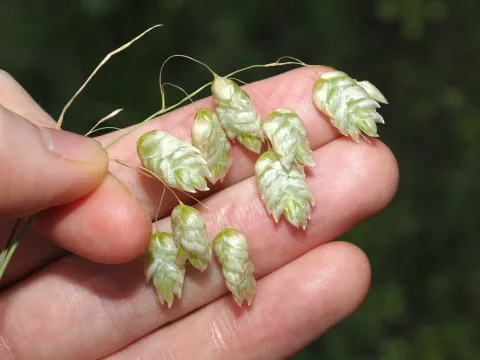
This grass thrives in full sun, which promotes the development of strong stems and vibrant, nodding spikelets that characterize the species.
Soil requirements are modest, as Briza prefers well-drained, sandy, or stony soils that do not retain excessive moisture during the rainy season.
Although it is relatively drought-tolerant once established, supplemental watering during prolonged dry spells will ensure optimal spikelet formation.
Over-fertilization should be strictly avoided, as excess nitrogen leads to lush, weak growth that may cause the plants to lodge or flop over.
The plant adapts well to various climatic zones but performs best in temperate conditions with a distinct seasonal cycle of growth and maturation.
Common issues include fungal infections such as rust and leaf spots, which typically appear during periods of high humidity and stagnant air.
Insect pests, including aphids, can cluster on the stems and seed heads, draining vital nutrients and weakening the overall health of the plant.
Root rot is a significant risk in poorly drained soils and can be lethal, necessitating immediate attention to soil composition and drainage systems.
Small mammals or snails may damage young growth, which often requires protective measures such as physical barriers or slug pellets during the spring.
Integrated pest management, including weeding and thinning, is the most effective approach for maintaining healthy and vigorous stands of Briza.
Harvesting for floral use should be timed precisely when the seed heads are fully formed but before they lose their aesthetic color or start dropping.
Cutting should take place in the mid-morning, once any dew has evaporated, to ensure that the stems are dry and ready for the curing process.
To preserve the shape, bundles should be hung upside down in a dark, cool, and well-ventilated area, avoiding direct sunlight to prevent bleaching.
Patience is key during the drying process, as rapid drying can cause the delicate spikelets to become brittle and lose their characteristic shape.
Once completely cured, the grass can be kept in a dry container or used in arrangements, where it can last for several months with minimal care.