
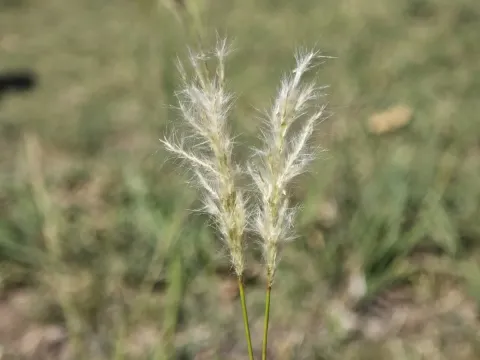
Bothriochloa laguroides
Bothriochloa laguroides
Bothriochloa laguroides, commonly known as silver bluestem, is a perennial bunchgrass belonging to the Poaceae family. It is recognized for its significant role in grasslands and its adaptation to semi-arid environments.
What the section contains
Bothriochloa laguroides
Native to North and South America, this grass is well-adapted to the prairies and steppes, where it forms stable plant communities. Its distribution has expanded due to its ability to colonize diverse landscapes successfully.
The grass thrives in well-drained soils, including rocky or gravelly textures. It exhibits excellent drought resistance, making it a reliable forage source in areas where precipitation is limited or inconsistent.
For optimal growth, Bothriochloa laguroides requires full sun exposure and warm temperatures. It is highly efficient at nutrient uptake, allowing it to survive in soils with lower fertility levels than conventional crop species.
Agricultural management is relatively simple, primarily involving rotational grazing strategies to prevent overgrazing. It produces a dense biomass that supports high-quality grazing throughout the growing season.
While robust, this species is susceptible to rust fungi, particularly under high humidity or poor air circulation conditions. Management practices should prioritize maintaining vigorous growth to improve the plant's resistance.
Pests such as aphids and soil-dwelling larvae can impact established stands. However, these rarely cause economic damage unless the crop is already stressed by drought or improper grazing management.
To reduce the incidence of disease, it is recommended to avoid excessive irrigation or nitrogen fertilization that encourages lush, vulnerable growth. Keeping the pasture properly mowed helps manage the plant's health.
Weed competition during the establishment phase is the primary threat to new plantings. Once the grass is well-established, it is generally aggressive enough to outcompete most common invasive weeds.
Monitoring the soil's condition is essential to prevent compaction, which can weaken root systems and increase the susceptibility of the grass to opportunistic pathogens or environmental stressors.