
Bouteloua aristidoides
Bouteloua aristidoides
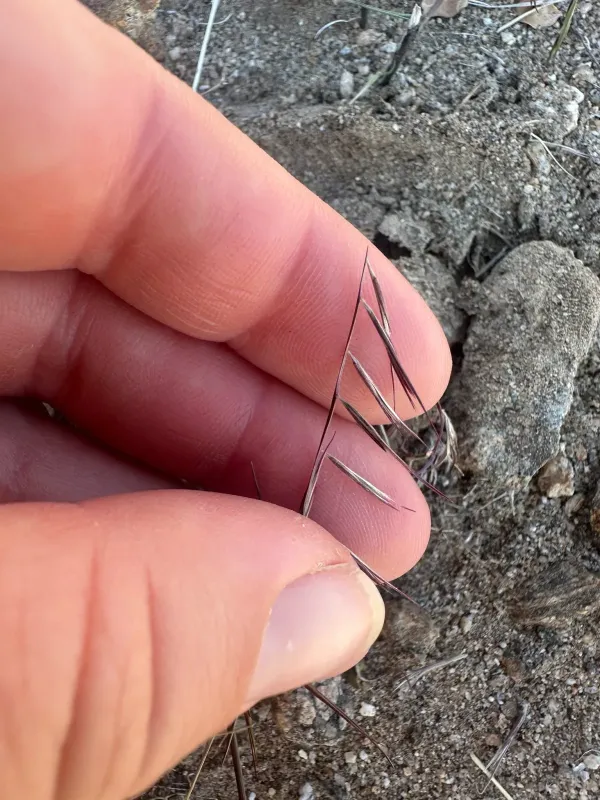
Description
Growing requirements
Bouteloua aristidoides, commonly known as needle grama, is an annual grass species belonging to the Poaceae family. It is native to the arid regions of the Southwestern United States and Northern Mexico, where it thrives in harsh desert environments.
The plant is highly adapted to extreme temperature fluctuations and water scarcity. Its evolutionary strategy relies on a rapid life cycle, enabling it to germinate, grow, and set seeds during the short periods of monsoon rains that define its natural geographic range.
Botanically, it is characterized by its slender, often branched stems and narrow, short leaves. Its inflorescence consists of unilateral racemes, which are highly efficient for wind-based seed dispersal across barren landscapes where it typically grows.
Needle grama prefers well-drained sandy or gravelly soils. It is intolerant of waterlogged conditions, making well-aerated soil substrates essential for its survival. It does not require high nitrogen levels, as it has adapted to the nutrient-poor soils commonly found in its habitat.
In agricultural practice, this grass is valued primarily as a rangeland forage species. Although it provides relatively low biomass compared to cultivated crops, its resilience makes it an essential nutritional source for livestock grazing in desert pastures where forage availability is limited.