
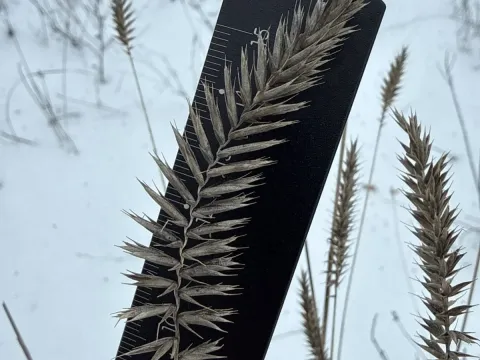
Crested Wheatgrass
Agropyron
Crested wheatgrass is typically sown in early spring or late autumn. Early spring seeding is often preferred to take advantage of soil moisture, while dormant autumn seeding can ensure rapid germination as soon as soil temperatures rise in the spring.
What the section contains
 Ciliate wheatgrass
Agropyron ciliare
Ciliate wheatgrass
Agropyron ciliare
 Dasyanthum wheatgrass
Agropyron dasyanthum
Dasyanthum wheatgrass
Agropyron dasyanthum
 Kamoji wheatgrass
Agropyron kamoji
Kerch wheatgrass
Agropyron cimmericum
Pubescent wheatgrass
Agropyron pubescens
Semicostate wheatgrass
Agropyron semicostatum
Tana wheatgrass
Agropyron tanaiticum
Kamoji wheatgrass
Agropyron kamoji
Kerch wheatgrass
Agropyron cimmericum
Pubescent wheatgrass
Agropyron pubescens
Semicostate wheatgrass
Agropyron semicostatum
Tana wheatgrass
Agropyron tanaiticum
 Velvety wheatgrass
Agropyron velutinum
Velvety wheatgrass
Agropyron velutinum
Crested Wheatgrass
Seeding rates for this perennial grass range from 8 to 12 kilograms per hectare for drill seeding. When planting in wider rows for seed production, the rate can be reduced to 5–6 kilograms to allow for better tillering and air circulation.
Seeds should be planted at a depth of 2 to 4 centimeters. Because the seeds are small, it is critical to ensure they are covered by sufficient soil and that the seedbed is firmed with a roller to maximize soil-to-seed contact for uniform emergence.
Crested wheatgrass is a hardy member of the Poaceae family. It is renowned for its exceptional drought tolerance, which makes it a staple for revegetation projects and livestock forage in arid and semi-arid regions globally.
The root system of this grass is extremely dense and fibrous, capable of penetrating deep into the soil profile. This characteristic not only helps the plant survive extended dry spells but also makes it an excellent choice for stabilizing erodible soils.
This crop is highly adaptable to various soil types, including sandy, stony, and slightly saline conditions. It thrives in well-drained soils with a neutral pH, though it is notably sensitive to waterlogged or flooded environments.
Crested wheatgrass requires full sunlight to achieve maximum growth potential. It is not suitable for shading by trees or tall canopy crops, as it will lose vigor and produce less biomass under low-light conditions.
While tolerant of low-fertility soils, nitrogen fertilization in the spring can significantly boost productivity. Phosphorus and potassium are best applied during pre-plant soil preparation to encourage early root establishment and overall plant vigor.
Good field preparation is essential to eliminate competing weeds before establishment. As the grass develops slowly in its first year, ensuring it has a head start against aggressive annual weeds is vital for long-term success.
It is one of the most persistent forage grasses available, often lasting for several decades if managed correctly. Its durability makes it a highly sustainable option for long-term pasture development.
Yields of forage vary significantly based on precipitation, usually ranging from 10 to 25 tons of green biomass per hectare. Under irrigation or in wet years, these yields can increase markedly, reflecting the plant's high nitrogen-use efficiency.
Harvesting for seed requires precise timing, as crested wheatgrass spikes can shatter easily upon maturity. Farmers must watch for the straw-yellow color change, indicating that the seeds are fully developed before shattering occurs.
The stands remain productive for many years, but yield can decline as the stand becomes "sod-bound." Periodic light harrowing or disk tillage can help break up the sod, improve water infiltration, and stimulate new growth in older stands.
It is highly palatable to livestock, particularly in the spring before the stems become overly fibrous. This nutritional quality makes it a favorite for cattle and sheep ranchers who prioritize early season grazing.
Crested wheatgrass is often paired with legumes like alfalfa to create high-protein forage mixes. This combination balances the nutritional profile and improves the total dry matter yield of the pasture over time.
Common diseases affecting this grass include rusts and smuts, which can impact foliage health and seed viability. Managing moisture and stand density is crucial to minimize the spread of fungal pathogens in the field.
Insect pests, such as wireworms and various grass-feeding flies, can cause damage to stems and developing florets. Integrated pest management (IPM) strategies, including crop rotation and the use of certified clean seeds, are primary defense measures.
Ergot is a significant concern for seed production, as it introduces toxic alkaloids that are harmful to livestock. Cleaning seeds thoroughly to remove ergot sclerotia is mandatory for both animal safety and maintaining high-quality seed lots.
Avoiding overgrazing is the best agrotechnical protection against weeds and pathogens. Healthy, well-managed grass stands are generally robust enough to outcompete most invasive species and withstand minor pest pressures.
Monitoring the field for signs of discoloration or stunted growth allows for timely intervention. If chemical treatment is necessary, it should be applied based on local threshold guidelines to protect beneficial pollinators.
For high-quality hay, the crop should be mowed during the boot to early heading stage. Delaying harvest until full flowering leads to an increase in lignin and fiber, which significantly lowers the digestibility of the forage.
After cutting, rapid curing is necessary to maintain nutrient density. Modern mower-conditioners are recommended to speed up the moisture loss process, ensuring the final hay product retains its green color and nutritional value.
Grazing management should involve rotational systems that allow the grass to recover between periods of use. This approach prevents plant stress and ensures the longevity of the pasture stand for years to come.
Post-harvest seed cleaning should be conducted to reach industry-standard purity levels. Storing seeds in a cool, dry environment is essential to preserve germination rates for future planting seasons.
Crested wheatgrass remains an indispensable tool for agriculture in harsh environments. Its combination of drought resilience, longevity, and reliable forage production keeps it at the forefront of perennial grass research.