
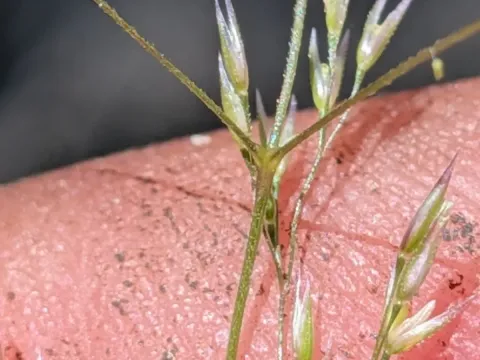
Rough bentgrass
Agrostis scabra
Rough bentgrass is typically established through surface seeding, as its minute seeds require minimal soil coverage to germinate successfully. The ideal time for sowing is during the cool, moist periods of early spring or late autumn.
What the section contains
Rough bentgrass
When preparing the seedbed, it is critical to achieve a firm and fine tilth. Rolling the soil after broadcasting the seeds ensures adequate seed-to-soil contact, which is essential for uniform moisture absorption and timely germination.
The seeding rate must be precisely calibrated to avoid overcrowding, which can lead to increased competition for nutrients and susceptibility to fungal diseases. Using a spreader ensures an even distribution across the field.
Initial growth is slow, and the young seedlings are vulnerable to drought and weed competition. Therefore, providing consistent, light irrigation during the first few weeks is vital for the establishment of a robust root system.
In temperate zones, sowing should be timed so that the plants develop sufficient leaf area to withstand winter dormancy, ensuring a vigorous start for the following growing season.
Agrostis scabra is a resilient perennial grass species native to North America, known for its ability to thrive in diverse and often challenging environmental conditions. It is frequently found in meadows, marshes, and disturbed lands.
This species shows a preference for well-drained, acidic to neutral soils. While it tolerates a variety of textures, it performs best in sandy or loamy soils where moisture is abundant but not stagnant.
Regarding climate, Rough bentgrass is highly adaptable, exhibiting excellent cold tolerance and an ability to survive in both mountainous and lowland regions. It requires full sunlight to semi-shaded conditions to maintain healthy growth.
The plant is biologically characterized by its delicate, spreading panicles which appear in mid-summer. This structure makes the grass both visually appealing and physically suited to self-seeding in naturalized areas.
Soil nutrient management is relatively straightforward as the species can survive in lower fertility soils, though moderate nitrogen application can significantly increase biomass production in commercial forage settings.
Like many species in the Agrostis genus, Rough bentgrass can be susceptible to various foliar diseases, particularly in environments with high humidity and poor air circulation. Common fungal issues include leaf spot and rusts.
Pests, such as aphids and certain species of grass-feeding mites, can occasionally cause localized damage to the foliage, particularly during peak summer heat. Monitoring is key to preventing large-scale infestations.
Weed encroachment is a primary threat during the establishment phase, as the slow-growing seedlings may be outcompeted by aggressive annual weeds. Proper field sanitation prior to seeding is the best preventative strategy.
Excessive nitrogen fertilization can sometimes trigger secondary pest issues, so it is recommended to follow a balanced fertility program that does not encourage overly succulent growth which attracts insects.
Integrated pest management (IPM) practices, including the use of resistant cultivars and maintaining optimal soil health, are the most sustainable ways to minimize threats and ensure the longevity of the grass stand.
Harvesting Rough bentgrass for forage should be conducted before the seeds reach maturity to ensure the highest protein content and digestibility. Once the plant enters the reproductive stage, nutrient quality declines rapidly.
When baling as hay, moisture content must be carefully monitored to prevent mold growth. Because of the grass's fine structure, the drying process in the field can be quite fast under favorable weather conditions.
Seed production harvesting requires specialized equipment capable of handling fine grains. Timing is essential as the seeds are prone to shattering, meaning the window for optimal harvesting is often narrow.
In amenity and landscape settings, mowing should be performed with sharp blades to prevent tearing the leaf tips, which can create entry points for pathogens and result in a brown, unsightly appearance.
The removal of biomass must be balanced with soil maintenance. Periodic light fertilization following harvest helps the grass recover quickly and maintains the vigor of the perennial root stock for subsequent seasons.