
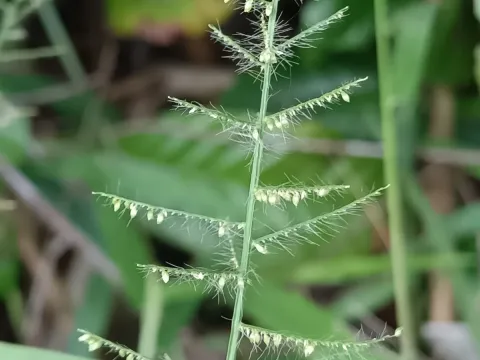
Rugoloa
Rugoloa
Rugoloa is a genus of perennial grasses belonging to the family Poaceae. These plants were historically classified under the genus Panicum, but recent taxonomic updates have established Rugoloa as a distinct group of forage grasses.
What the section contains


Rugoloa
The timing of sowing is critical and generally occurs during the onset of the warm season when soil temperatures are consistently above 15 degrees Celsius. This ensures rapid germination and early establishment of the root system.
Seeds should be sown using a standard drill, ensuring a shallow planting depth, as the small size of the seeds requires minimal soil coverage to prevent emergence failure.
In regions with distinct wet and dry seasons, sowing is typically synchronized with the start of the rainy season. This allows the plants to maximize growth during periods of moisture abundance.
Proper seedbed preparation is essential to remove weed competition before planting. Ensuring a firm and level surface promotes uniform seedling emergence and future stand stability.
Rugoloa thrives in well-drained soils and shows a preference for neutral to slightly acidic environments. It is capable of adapting to a variety of soil types but performs best where organic matter content is sufficient.
The plant demonstrates good tolerance to moderate drought conditions due to its deep and effective root system. However, for maximum productivity, steady moisture availability is required during peak growth stages.
Optimal temperatures for development range from 20 to 30 degrees Celsius. Rugoloa is highly sensitive to frost, and prolonged cold temperatures can severely restrict growth or cause permanent damage to the stand.
Strategic nitrogen fertilization is recommended to boost leaf area development and total biomass production. Organic amendments can also improve long-term soil structure and moisture retention.
Full sun exposure is vital for the health of Rugoloa stands. Shaded areas often result in reduced vigor and lower nutritional quality, making site selection a priority in management planning.
Rugoloa is primarily used as a high-quality forage crop for cattle and other livestock. It is prized for its ability to provide consistent green biomass throughout the grazing season.
Biomass yields depend heavily on management intensity, including the frequency of harvesting and the level of nutrient inputs. Under optimal conditions, multiple cuts per season are achievable.
Nutritional quality is highest during the vegetative stage before flowering begins. Early harvesting captures the ideal balance of crude protein and digestible fiber required for animal nutrition.
Rotational grazing is the preferred management strategy to sustain high yield levels. This approach allows the plants sufficient recovery time to replenish carbohydrate reserves in the roots.
Total dry matter yield is competitive with other perennial grasses, making Rugoloa an efficient component of sustainable feeding systems in suitable climates.
Common pathological threats include fungal infections such as rust and leaf spot, which are often triggered by high humidity and poor air circulation within the stand.
Pests such as aphids and various lepidopteran larvae can impact young stands. Regular monitoring is necessary to determine if intervention is needed to protect the crop's vigor.
Weed competition is the greatest threat during the establishment phase. Effective pre-plant cleaning and post-emergence management are required to prevent weeds from suppressing the slow-growing seedlings.
Compaction of the soil from heavy equipment can inhibit root respiration and nutrient uptake, leading to overall plant stress and increased susceptibility to secondary infections.
An integrated pest management approach, including crop rotation and proper nutrient balance, is essential to minimize the risk of significant yield losses.
Hay production should target the pre-heading stage to maximize nutritional value. Harvesting too late results in a significant increase in lignified stems and a corresponding drop in feed quality.
When used as pasture, controlling the grazing height is crucial for persistence. Keeping a residual height of 5–8 centimeters promotes faster regrowth and maintains root health.
For silage, the forage should be wilted to a specific moisture percentage to ensure proper fermentation and stability in the silo or bale.
Modern harvesting machinery should be properly adjusted to ensure a clean cut, preserving the plant's growing points. This is particularly important for multi-cut systems.
Post-harvest care involves allowing the stand a period of rest and applying maintenance fertilizers if necessary. This promotes rapid regrowth and helps the stand withstand environmental stressors.