
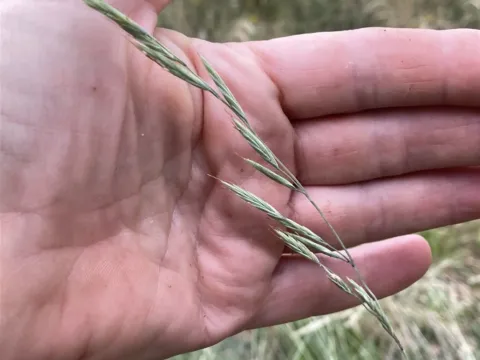
Rough fescue
Festuca asperula
Rough fescue is a perennial grass belonging to the Poaceae family. The crop is highly valued for its winter hardiness and ability to adapt to challenging climatic conditions, making it a critical component of grass mixtures in temperate climate zones.
What the section contains
Rough fescue
Sowing is recommended during early spring when the soil is saturated with moisture after snowmelt. The optimal seeding depth is between 1 and 2 centimeters, ensuring uniform germination while minimizing the risk of drying out the topsoil layer.
When cultivating for seed or as a pasture crop, it is essential to follow seeding rates that vary depending on soil conditions. A standard row-seeding method with 15-centimeter spacing is typically used to establish a robust stand.
The crop is characterized by slow development in the first year, making effective weed management essential during the initial growth phase. Proper seedbed preparation and soil compaction after sowing are critical for the formation of a strong root system.
Ongoing maintenance involves providing mineral fertilizer supplements, especially nitrogen, which promotes green mass production in subsequent growth years. A well-established stand of rough fescue can maintain high productivity in the same location for up to 5–7 years.
Rough fescue is quite demanding regarding soil structure, preferring loamy and sandy-loam soils with good drainage. It does not tolerate stagnant water or excessive moisture, so flat sites with no risk of flooding are chosen for its placement.
The plant exhibits moderate drought tolerance, although it achieves maximum productivity in regions with sufficient rainfall during the spring and summer periods. In overly light sandy soils, the plant's development slows down, requiring additional organic fertilization.
The optimal soil pH level for successful cultivation ranges from 6.0 to 7.0. In cases of high soil acidity, liming is necessary, as this significantly improves the absorption of essential nutrients by grass plants.
The temperature regime for rough fescue is characterized by high tolerance to spring frosts. The plant is able to resume vegetation at low positive temperatures, ensuring early availability of green forage for livestock.
Light exposure also plays a significant role; the crop is light-loving, so it is not recommended to sow it under the cover of high-growing crops that might cause suppression of young seedlings due to shading.
The productivity of rough fescue depends on the level of agronomic management and the frequency of mowing. Under favorable conditions, the crop is capable of producing two cuts per season, ensuring a high yield of green mass per hectare.
Hay yields under intensive use reach average indicators for meadow grasses. The bulk of biomass is formed by the time of mass flowering, when the plant accumulates the maximum amount of nutrients in its stems and leaves.
To increase yields, it is important to perform regular applications of phosphorus-potassium fertilizers in the autumn. This promotes the accumulation of sugars in the rhizomes and increases the overall winter hardiness of the stand, directly impacting yields for the following year.
Use as a pasture crop requires rotational grazing to allow plants a period for vegetative recovery. With proper rotation, the fescue regrows rapidly after grazing, maintaining its nutritional value throughout the season.
Seed production potential depends on the climate: in years with dry and warm summers, seed ripening is more efficient. The quality of seed material is determined by the thousand-kernel weight and germination percentage, requiring strict control during harvest.
The main diseases affecting fescue include rust and various types of powdery mildew, which develop in high humidity and dense stands. Systemic fungicides are used to combat them during periods of active spore dispersal.
Pests such as grass flies, aphids, and various bug species can damage young shoots and ears. Regular monitoring of crop condition allows for the timely detection of infestation hotspots and the application of biological or chemical insecticides.
- Wireworms and weevil larvae that damage the root system.
- Grass aphids that reduce productivity by sap-sucking.
- Helminthosporium leaf spot, affecting leaves in humid weather.
- Root rots occurring when soil aeration is compromised.
Prevention of pests and diseases is based on crop rotation and avoiding monoculture. Rational use of nitrogen fertilizers also reduces plant susceptibility to fungal infections.
Applying agronomic techniques, such as early spring harrowing, helps clean the fields of plant debris, which acts as a reservoir for disease pathogens, significantly improving the field's phytosanitary state.
Hay harvesting is conducted during the booting stage or the beginning of flowering, when the protein concentration in the plant reaches its peak. Delaying harvest leads to stem lignification and a reduction in the overall feed quality of the gathered mass.
Mowing is recommended at a height of 6–8 centimeters from the soil surface. This height promotes faster regrowth, which is important for obtaining a second cut or preparing the stand for the winter period.
When preparing hay, it is important to ensure even drying of the cut mass to prevent mold and loss of nutritional value. Using tedders to accelerate moisture loss in field conditions is optimal.
Harvesting for seeds requires special caution, as the plant's inflorescences are prone to shattering if over-mature. Harvesting is done by direct or two-stage methods at the moment of waxy maturity when the majority of panicles turn yellowish.
After harvesting the seed material, immediate cleaning and drying to a moisture content of no more than 14% are performed, ensuring the preservation of seed viability during long-term warehouse storage.