
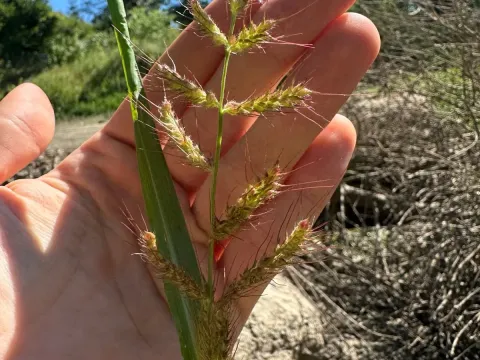
Rough barnyard grass
Echinochloa muricata
Rough barnyard grass (Echinochloa muricata) is an annual grass species belonging to the Poaceae family. It is morphologically similar to other barnyard grass varieties but is distinguished by the presence of prominent bristles on its spikelets.
What the section contains
Rough barnyard grass
Native to North America, this species has successfully adapted to various ecosystems globally. It is commonly found in disturbed sites, moist soil areas, and agricultural fields where environmental conditions favor its rapid colonization.
The plant demonstrates high adaptability to different soil types but thrives best in fertile, moist, or wet soils. It has a significant tolerance for periodic waterlogging, allowing it to dominate areas that are otherwise difficult for other plants to occupy.
Climatic requirements focus on heat and high humidity during the growing season. The grass benefits from high temperatures and long daylight hours, which stimulate vigorous vegetative growth and prolific seed production.
Effective agricultural management requires integrated pest management strategies. Because of its prolific seed bank in the soil, preventing seed set is critical to reducing the pressure of this weed in subsequent crop cycles.
The presence of rough barnyard grass in crop fields leads to severe yield losses due to its aggressive competition for essential nutrients, water, and sunlight, often surpassing the growth rate of cash crops.
The plant serves as a host for several major agricultural pests, including cereal aphids and various stem-boring larvae that cause systemic damage to young crop plants.
Fungal diseases such as rusts and smuts are commonly associated with this grass. Once established on the weed, these pathogens easily spread to adjacent cereal crops, necessitating intensive fungicide application.
High moisture and dense plant populations create a microclimate favorable for disease spread. Maintaining field hygiene is essential to prevent the accumulation of inoculum in the soil and surrounding environment.
Early identification and removal are the most effective ways to manage threats. Utilizing pre-emergence and post-emergence herbicides, combined with mechanical tillage, helps maintain crop health throughout the season.