
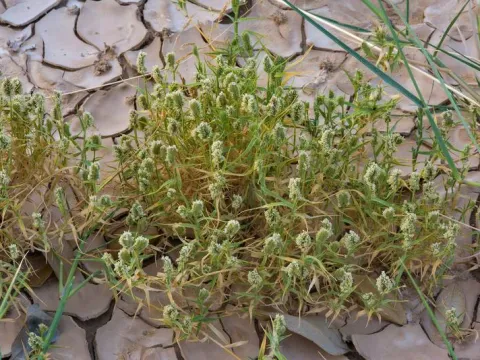
Aeluropus
Aeluropus
Aeluropus is a genus of perennial grasses belonging to the Poaceae family. These plants are well-known halophytes, meaning they have evolved specialized mechanisms to thrive in high-salinity environments that are typically toxic to the majority of conventional crops.
What the section contains

Aeluropus
The biological structure of Aeluropus is defined by its extensive, often rhizomatous root system, which allows it to anchor firmly in sandy or saline soils. This characteristic is essential for its survival in harsh, shifting environments like coastal plains, salt marshes, and arid basins.
Climate requirements for Aeluropus include high solar radiation and warmth, as it is native to the arid and semi-arid regions of Eurasia. The species exhibits remarkable drought resistance, maintaining metabolic activity even when water availability is significantly restricted.
Agricultural management for this crop focuses on sustainable land use. It is rarely sown as a primary monoculture; instead, it is often managed as part of natural grazing land where its ability to withstand intensive animal grazing without significant degradation is highly valued.
The primary economic and environmental use of Aeluropus lies in its role as a phytoremediation tool. By stabilizing soil and gradually accumulating organic matter, it aids in the restoration of degraded, salt-affected land, effectively slowing down desertification processes.
Although Aeluropus is highly resilient, it is susceptible to typical grass pathogens, including various rust fungi (Puccinia spp.) and powdery mildew, especially when humidity levels rise above the plant's natural comfort zone.
Insects such as cereal aphids and specific stem-boring larvae may occasionally cause damage to the foliage. However, given the plant's robust anatomy and high salt content in its tissues, these infestations are generally not destructive enough to require chemical intervention in open environments.