
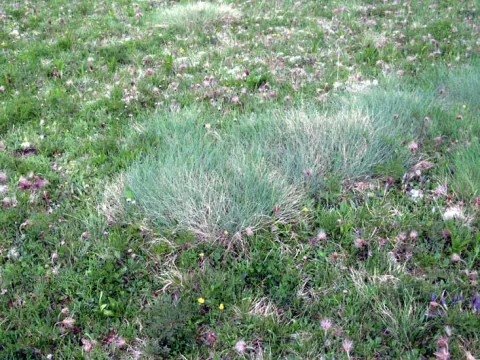
Narrow-flowered fescue
Festuca stenantha
Narrow-flowered fescue (Festuca stenantha) is a perennial grass species belonging to the Poaceae family. It is recognized for its ability to thrive in diverse ecological conditions, serving as an important forage crop in temperate and mountain regions where other grasses may struggle to establish.
What the section contains
Narrow-flowered fescue
The plant has an extensive native range, primarily in parts of East Asia. Its biological adaptation to varying light and temperature regimes makes it a resilient candidate for agricultural land improvement and the restoration of degraded pasture ecosystems.
Regarding soil requirements, Festuca stenantha is quite adaptable, preferring well-drained soils ranging from loamy to sandy structures. While it does not require intensive irrigation, it thrives in moderate moisture conditions, demonstrating notable drought tolerance due to its deep root structure.
Botanically, it is characterized by fine, narrow leaf blades and a distinct panicle inflorescence. These features contribute to its drought resistance and help in maintaining high biomass quality throughout the growing season, which is essential for livestock nutritional stability.
Cultivation practices focus on establishing a strong root system during the initial growth stage. The plant is known for its persistence and ability to withstand repeated grazing or mowing, making it a sustainable choice for long-term pasture management and soil conservation projects.
The crop is susceptible to common fungal pathogens such as rust and powdery mildew, especially under high humidity conditions. Implementing crop rotation and maintaining proper plant density are effective strategies for minimizing the risk of widespread fungal outbreaks.
Insect pests, including aphids and various grass-feeding larvae, can affect the crop quality. Early detection through regular field inspections is crucial for managing these populations before they cause significant economic damage to the forage biomass.
Weed competition during the seedling stage is a primary threat to stand establishment. Proper field preparation and the use of clean, high-quality seeds are essential to ensure the fescue successfully dominates the target area during the first few months of growth.
Root-feeding pests can pose a localized threat, leading to decreased vigor in certain sections of the field. Maintaining good soil health and monitoring for abnormal plant yellowing can help in identifying and mitigating these issues at an early stage.
- Fungal disease management via crop rotation.
- Monitoring for aphid and larva populations.
- Ensuring optimal seed depth during planting.
- Prevention of soil compaction in grazing areas.