
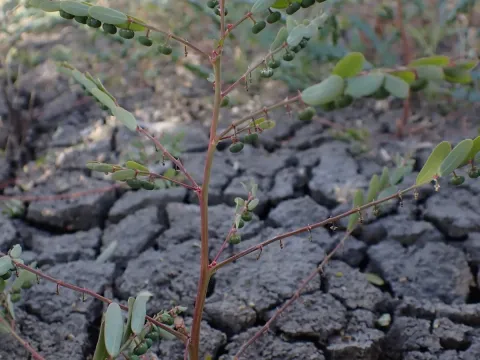
Phyllanthus lacunarius
Phyllanthus lacunarius
Sowing Phyllanthus lacunarius is typically timed with the onset of the rainy season to ensure that soil temperatures consistently remain above 20°C for optimal germination.
What the section contains
Phyllanthus lacunarius
Seed treatment, such as soaking in lukewarm water, is highly recommended to improve the germination rate and break the dormancy of the seeds before planting.
Seeds should be sown at a depth of 1–2 centimeters, ensuring they remain in contact with moist soil to facilitate initial growth and root establishment.
Spacing between rows should be carefully maintained to ensure that every plant receives enough sunlight and air circulation, which prevents overcrowding.
Applying a thin layer of organic mulch after sowing helps stabilize soil temperature and retains essential moisture during the critical germination phase.
This crop belongs to the Phyllanthaceae family and thrives in well-drained, fertile sandy-loam soils with a neutral or slightly acidic soil reaction.
Being a heat-loving plant, it requires a tropical or subtropical climate to complete its growth cycle and achieve the expected biomass production.
Ample sunlight is essential for this species, as shading can lead to elongated, weak stems and a significant decrease in the final harvest quality.
Regular irrigation is necessary, though care must be taken to avoid waterlogging, as the roots are highly susceptible to damage from poor aeration.
Fertilization with a balanced NPK ratio during the vegetative phase provides the plant with the nutrients needed for robust stem and leaf development.
Root rot and other fungal diseases represent the primary threats to Phyllanthus lacunarius, especially when grown in soil with poor drainage characteristics.
Pests such as spider mites and aphids can infest the foliage, particularly during dry spells, which may severely weaken the plant if not controlled.
Implementing a strict crop rotation schedule helps reduce the accumulation of soil-borne pathogens and decreases the risk of recurrent disease outbreaks.
Integrated pest management, focusing on biological controls, is preferred to maintain the health of the crop while ensuring agricultural sustainability.
Consistent monitoring of plant health allows for the early detection of stress factors, enabling rapid intervention before the damage becomes irreversible.