
Baccaurea racemosa
Baccaurea racemosa
Baccaurea racemosa, commonly known as Menteng, is a productive fruit-bearing tree belonging to the Phyllanthaceae family. Native to the tropical rainforests of Southeast Asia, this species thrives in environments characterized by high humidity and consistent warmth.
What the section contains
Baccaurea racemosa
The tree typically grows in tropical lowlands and requires deep, fertile, and well-draining soil. It is particularly well-suited for areas with high rainfall, though it can adapt to seasonal fluctuations if consistent soil moisture is maintained.
For optimal growth, Baccaurea racemosa requires a location that provides partial shade during its juvenile phase, transitioning to full sun as the tree matures. Protection from strong winds is essential to prevent mechanical damage to the branches and foliage.
Agrotechnical management includes regular mulching to preserve soil moisture and suppress weed growth. The plant is sensitive to waterlogging, so proper site preparation with drainage systems is crucial for root health and overall longevity.
Soil nutrient status should be monitored annually. A balanced organic fertilizer high in micronutrients supports healthy flowering and fruit set, ensuring the tree reaches its maximum production potential in a stable climate.
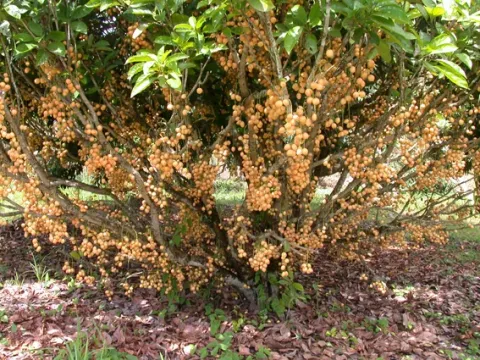
The yield of Baccaurea racemosa begins when the tree reaches maturity, usually between 5 to 7 years after planting. Fruit production is characterized by heavy clusters developing directly along the trunk and main branches, a trait known as cauliflory.
A single healthy tree can produce a significant volume of fruit, which are small, round berries with a firm skin. The pulp has a refreshing acid-to-sweet flavor profile, making it a popular ingredient for juices, preserves, and traditional culinary dishes.
Improving yield involves careful pruning to increase airflow through the canopy and reduce the risk of humidity-related fruit rot. Selective pruning also aids in managing tree height, making the manual harvesting process more efficient.
Environmental stressors such as extended dry periods can lead to premature fruit drop. Providing adequate irrigation during the fruit development stage is a critical practice for maintaining consistent production levels across the growing season.
Future commercial potential for this crop lies in selecting cultivars with improved shelf-life and uniform ripening characteristics. Such advancements would facilitate larger-scale distribution and increase the economic value of the fruit in international markets.
Common threats to Baccaurea racemosa include various scale insects and mealybugs that congregate on tender shoots and leaf undersides. These pests can cause chlorosis and stunted growth if infestations are not controlled promptly.
Fungal pathogens such as anthracnose pose a significant threat during periods of high moisture, particularly affecting the fruit skin and causing lesions. Preventive measures include regular sanitation of the orchard by removing infected plant debris.
Root rot is a major risk in soils with poor drainage. Once established, it is difficult to treat, making preventative site management and the use of balanced irrigation protocols the most effective strategies for maintaining orchard health.
Integrated Pest Management (IPM) is recommended for this crop to minimize chemical inputs. The use of biological control agents and organic oils can successfully mitigate pest pressure while ensuring that the fruit remains safe for human consumption.
Regular orchard monitoring is essential for early detection of symptoms. By keeping the canopy pruned and clear of overcrowding, farmers can ensure that sunlight reaches all levels of the tree, which naturally discourages the growth of many fungal pathogens.
Harvesting Baccaurea racemosa is a delicate operation due to the proximity of the fruit clusters to the tree's bark. It is recommended to use sharp secateurs to clip the stems rather than pulling the fruit, which protects the tree from wounding.
The harvest index is primarily determined by color change, as the fruit transitions from green to shades of yellow, purple, or red depending on the specific variety. Fruit should be harvested when fully colored to ensure optimal sweetness.
Post-harvest management involves keeping the fruit in well-ventilated crates to prevent heat buildup. Because the fruit has a thin skin, it is prone to mechanical bruising, necessitating careful handling during the sorting and packaging process.
Cool storage conditions are advised to extend the freshness of the harvested produce. Since the fruit is highly perishable, logistical planning must ensure that transport to markets occurs within 48 to 72 hours of harvest to maintain peak quality.
Efficient harvesting sequences allow for continuous production, as the fruit on the clusters does not always ripen simultaneously. Multiple passes through the orchard during the peak season maximize total yield and reduce the amount of wasted fruit left to decay.