
Baccaurea parviflora
Baccaurea parviflora
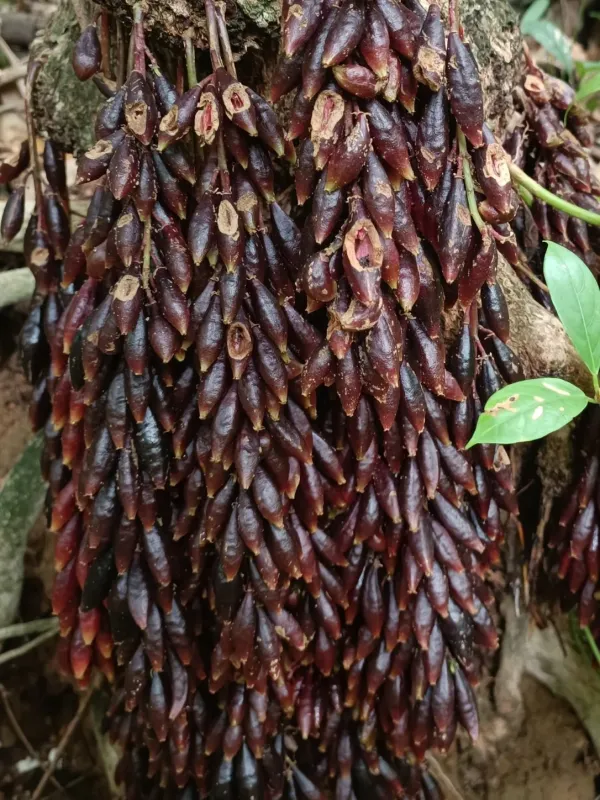
Description
Sowing dates
Baccaurea parviflora, belonging to the Phyllanthaceae family, is a tropical tree native to Southeast Asian rainforests. It is typically propagated by seeds, which require specific conditions to germinate.
Fresh seeds should be sown in a rich, humus-based substrate immediately after harvesting to ensure high viability. The seedbed must be maintained in a consistently moist and warm environment.
Germination usually occurs at temperatures between 25°C and 30°C. Seedlings develop slowly and require protection from direct sunlight and drying winds during their early growth phase.
Transplanting to the final location should be done once the saplings have reached a robust height. Care must be taken to minimize root disturbance during the transfer process.
The young trees perform best in sites that replicate their native forest floor habitat, where indirect light and stable soil moisture are readily available.
Growing requirements
This species thrives in high-rainfall tropical climates. It requires consistent humidity throughout the year to maintain healthy physiological processes and optimal growth.
The soil should be well-drained, fertile, and slightly acidic. Waterlogged conditions must be avoided, as the root system of Baccaurea parviflora is sensitive to prolonged saturated soils.
While seedlings prefer shade, mature trees can tolerate dappled sunlight. Providing a mulch layer around the base helps retain soil moisture and adds organic nutrients over time.
The plant cannot withstand frost or cold temperatures. It is suited strictly for tropical and near-tropical zones where thermal stability is guaranteed throughout all seasons.
Proper spacing is necessary to allow air circulation, which is crucial for preventing humidity-related issues in the tree canopy.
Yield
Baccaurea parviflora exhibits cauliflory, meaning its flowers and fruits develop directly on the trunk. This trait is a distinct botanical characteristic of the genus.
Productivity increases as the tree matures. The fruits are typically arranged in clusters and possess a pleasant acidic-sweet flavor, making them popular in local culinary traditions.
Harvesting is labor-intensive due to the fruit's position on the trunk. Manual harvesting is the standard method, requiring care to avoid wounding the bark of the tree.
The fruits have a relatively short shelf life and are best consumed fresh or processed shortly after harvest to preserve their nutritional quality.
- Fruits are harvested when fully colored and mature.
- Annual production is common under ideal management conditions.
Main diseases and pests
Common pests include tropical fruit flies and leaf-eating insects. These can significantly reduce both the quantity and quality of the harvest if left unmanaged.
Fungal diseases are a primary concern, especially in high-humidity environments. Leaf spots and bark infections can occur if the canopy remains too dense or damp.
Maintaining good hygiene in the orchard by removing fallen debris and infected plant parts is essential for long-term disease management.
Integrated pest management strategies are recommended, focusing on natural predators and sustainable farming practices to protect the crop.
Balanced fertilization and regular monitoring help the tree maintain its natural vigor, allowing it to better withstand environmental and biological pressures.