
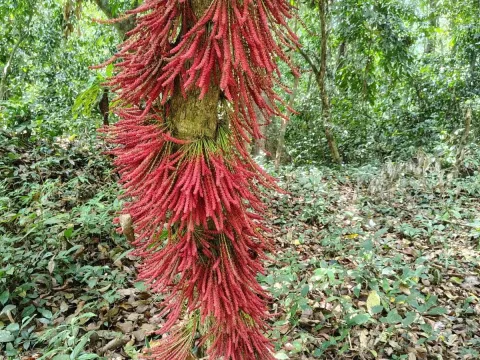
Baccaurea
Baccaurea
Baccaurea belongs to the family Phyllanthaceae and is a genus of tropical evergreen trees. Naturally found in the rainforests of Southeast Asia, these trees can reach heights of up to 20 meters, thriving in warm and humid tropical environments.
What the section contains


Baccaurea
The plant has specific soil requirements, preferring deep, fertile, and well-drained soils rich in organic matter. While it loves moisture, waterlogging is detrimental, necessitating a balance between soil hydration and proper drainage to ensure root health.
Climatic requirements are strict: the tree requires frost-free conditions and high relative humidity. It is best suited for equatorial regions where temperatures remain consistently high throughout the year, as the plant does not tolerate significant thermal fluctuations.
Cultivation practices involve regular pruning to maintain a healthy canopy structure. A well-managed crown allows for adequate light penetration to the trunk, which is essential for the development of fruit in this species, as it exhibits cauliflory.
Propagation is typically achieved through seeds, but for commercial production, grafting or budding techniques are preferred. These methods ensure that the desired fruit quality and tree vigor are maintained, producing consistent yields in managed orchards.
One of the most distinct features of Baccaurea is that its fruits develop directly on the trunk and thick branches. This biological trait, known as cauliflory, makes the tree unique in appearance and facilitates the harvesting of fruit clusters.
The fruit typically has a leathery skin and juicy, acidic to sweet pulp segmented inside. It is widely used for fresh consumption, as well as in the production of juices, jams, and traditional alcoholic beverages in the regions where it is cultivated.
Beyond its culinary utility, the timber of certain species is valued for its strength and durability. This makes Baccaurea a multi-purpose crop, serving both the local fruit market and the construction material industry in its native range.
Yield capacity is influenced by the tree's age and environmental conditions. During the peak harvest season, a mature tree can produce a substantial amount of fruit, requiring careful manual harvesting to avoid damaging the fruiting zones on the trunk.
With an increasing global interest in exotic tropical fruits, Baccaurea is gaining attention for its nutritional profile. Its vitamin content and unique flavor make it a promising candidate for expansion in niche agricultural markets.
Baccaurea is susceptible to various fungal diseases, especially in high-humidity environments. Leaf spot and bark infections can cause significant damage, requiring prompt identification and the application of systemic fungicides to prevent spread.
Insect pests such as mealybugs and scale insects represent a major threat. These sap-sucking insects weaken the tree by draining vital nutrients and can facilitate the secondary growth of sooty mold, which impairs the plant's ability to photosynthesize.
Preventive maintenance is critical for orchard health. Ensuring adequate spacing between trees promotes better airflow, which is the most effective natural deterrent against the rapid spread of fungal pathogens within a plantation.
Integrated Pest Management (IPM) is the recommended approach for protecting Baccaurea. This includes monitoring populations of beneficial insects and applying horticultural oils or environmentally friendly insecticides only when necessary to control outbreaks.
Regular inspection of the root zone and trunk is advised, particularly after heavy rains. Keeping the base of the tree clear of debris helps reduce the habitat for soil-borne pests and minimizes the risk of rot during periods of prolonged wet weather.