
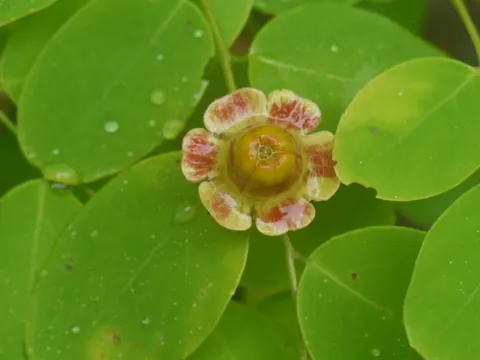
Breynia
Breynia J. R. Forst. Et. G. Forst. Nom. Cons.
Breynia is a genus of evergreen shrubs and small trees belonging to the Phyllanthaceae family. Native to the tropical regions of Asia, Australia, and the Pacific Islands, these plants thrive in high-humidity environments and consistent thermal conditions typical of tropical ecosystems.
What the section contains

Breynia
For successful cultivation, Breynia requires a stable temperature range between 20 and 25 degrees Celsius. The plant is sensitive to cold drafts and sudden temperature fluctuations, which can trigger leaf drop and physiological stress, making it an ideal candidate for greenhouse or indoor horticulture in temperate climates.
The soil substrate for Breynia must provide excellent drainage and aeration. A nutrient-rich, slightly acidic to neutral medium composed of peat, perlite, and organic compost is recommended to support robust root development and maintain proper moisture balance.
Light intensity is vital, especially for variegated varieties of Breynia. The plants require bright, indirect sunlight to maintain their vibrant foliage colors. Direct sun exposure should be avoided to prevent leaf scorching, while low light levels typically result in stunted growth and dull coloration.
Watering practices should focus on maintaining constant, uniform soil moisture without allowing the roots to sit in water. Overwatering, particularly during cooler periods, is a major risk factor that can lead to root rot and other moisture-related pathologies.
Breynia is susceptible to several common greenhouse pests, with the spider mite being the most prevalent. These tiny pests thrive in the dry air conditions often found in interior environments, feeding on leaf tissues and causing significant aesthetic damage.
Effective pest management for Breynia involves regular misting of the foliage and maintaining a high ambient humidity level to discourage mite colonization. If an infestation occurs, targeted acaricides should be used to eliminate the pest population without damaging the plant foliage.
Scale insects represent another significant threat, as they attach themselves to the stems and leaf undersides, drawing essential nutrients from the plant. Mechanical removal combined with systemic insecticide applications is necessary to control and eventually eradicate the infestation.
Fungal issues, such as root rot, often arise from poor irrigation management and inadequate soil drainage. Prevention is the key strategy, requiring strict adherence to appropriate watering cycles and the use of well-structured, porous potting media to ensure root health.
Overall plant vitality is heavily dependent on maintaining optimal environmental conditions. Regular monitoring for signs of stress, such as yellowing or shedding leaves, allows for early intervention and adjustments to environmental factors, ensuring the long-term health of the shrub.