
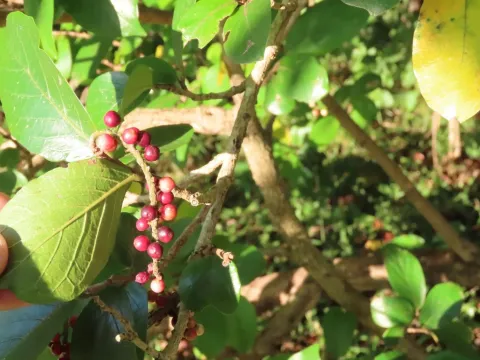
Antidesma venosum
Antidesma venosum
Antidesma venosum is a perennial woody plant belonging to the Phyllanthaceae family. In its natural habitat, it is mainly found in the tropical regions of Africa, preferring forest edges, river valleys, and savannah areas.
What the section contains
Antidesma venosum
The plant grows as a shrub or a small tree, typically reaching a height between 3 and 6 meters. The leaves feature distinctive venation, which gives the species its name, and the flowers are arranged in pendulous racemes.
Successful cultivation requires a warm tropical or subtropical climate with a marked rainy season. The plant is extremely sensitive to frost and requires consistently high temperatures throughout the entire growing season.
Antidesma is moderately demanding regarding soil conditions, preferring deep, well-drained fertile substrates with a neutral or slightly acidic pH. It can withstand short drought periods, but intensive cultivation practices require regular irrigation.
Economic use of the species focuses on harvesting edible fruits, which have a taste profile similar to blackcurrants or cherries. The fruits are consumed fresh or used to produce jams, juices, and fermented beverages.
The primary threats to the plant are insect pests common to tropical fruit crops, such as fruit flies, which can damage the yield during the maturation phase.
Fungal diseases occurring in high humidity can affect the foliage, causing leaf spots. Prevention involves ensuring adequate crown aeration and performing timely sanitary pruning.
The ripening process of Antidesma fruits is extended over time, necessitating selective harvesting as the berries change color from red to deep purple or almost black.
The fruits are highly perishable and do not withstand long-distance transportation without specialized packaging, thus they are usually marketed near their growing sites or processed on-site.