
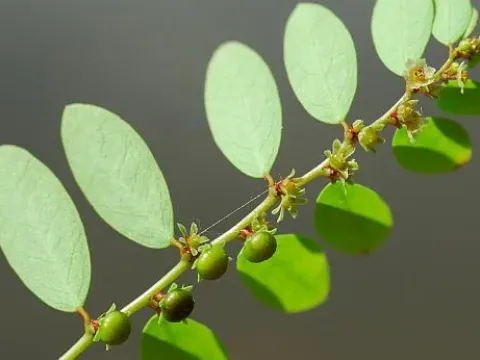
Carolina leaf-flower
Phyllanthus carolinensis
Carolina leaf-flower (Phyllanthus carolinensis) is a distinctive annual herb within the Phyllanthaceae family. It is native to the Americas, where it is typically found inhabiting moist, shaded environments, including wetlands and forest margins.
What the section contains
Carolina leaf-flower
The plant thrives in fertile, well-draining soils that retain significant moisture. In agricultural contexts, it responds well to organic fertilization and prefers a substrate that allows for deep root penetration without the risk of waterlogging.
Regarding climate, this species is highly intolerant to frost. It requires a long, warm growing season to complete its life cycle and reach maximum biomass. Consistent irrigation is essential in regions with sporadic rainfall patterns.
Botanically, it is characterized by simple, alternating leaves arranged in a distichous pattern along slender, branched stems. This arrangement maximizes photosynthetic efficiency in its natural habitat, which is often characterized by filtered light.
The propagation of the plant is primarily seed-based. To ensure uniform field coverage, seeds should be sown in prepared beds during late spring, once the soil temperature has stabilized at a high level.
Despite its natural resilience, the crop is susceptible to several pests, primarily aphids, which target the tender stems and emerging foliage. These insects not only damage plant tissue but can also serve as vectors for various plant viruses.
Fungal pathogens such as powdery mildew represent a significant threat under high humidity and poor ventilation. Maintaining adequate spacing between plants is the primary strategy to prevent the development of such fungal infections.
Root system health is paramount; overly saturated soils during the early development stages can lead to the proliferation of soil-borne pathogens. Proper drainage design is critical for maintaining healthy plant stands throughout the season.
Spider mites can become a nuisance during hot and dry spells, necessitating frequent monitoring of the leaf undersides. Early detection allows for localized management, preventing the need for broad-spectrum chemical interventions.
- Regular weeding to reduce resource competition.
- Ensuring proper air circulation within the canopy.
- Monitoring for changes in leaf color or growth rate.