
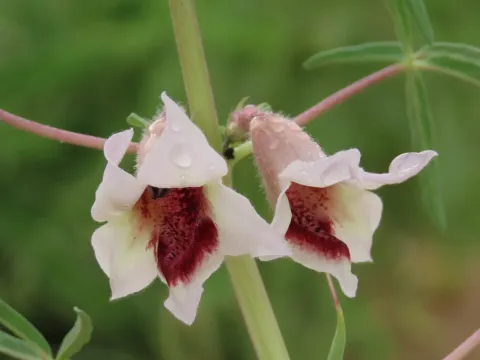
Cape sesame
Sesamum capense
Cape sesame (Sesamum capense) is a perennial herbaceous plant belonging to the Pedaliaceae family. It is a highly resilient species, well-adapted to the arid and semi-arid environments of southern Africa, where it plays a role in local biodiversity.
What the section contains
Cape sesame
The plant thrives in well-drained, sandy, or light loam soils with a neutral pH level. It is highly intolerant of waterlogging, making proper soil drainage a non-negotiable factor for successful cultivation and root health.
As a sun-loving species, Cape sesame requires full exposure to direct sunlight throughout its growing cycle. It prefers temperatures between 25°C and 35°C, as these conditions favor optimal physiological development and accumulation of plant oils.
The species demonstrates significant drought tolerance, allowing it to survive during extended dry seasons. However, growers must be cautious of cold shocks, as the plant is extremely sensitive to temperatures dropping below 15°C.
Effective agricultural management involves consistent maintenance of soil fertility, particularly the availability of nitrogen and phosphorus. Weed control during the early stages of establishment is critical to prevent resource competition.
Sowing should be delayed until the soil has warmed up to at least 20°C. Planting in cold, damp soil will likely lead to delayed germination and increased vulnerability to soil-borne pathogens or seed rot.
The optimal sowing depth is shallow, ranging from 2 to 3 centimeters. Because the seeds are small, deeper planting can prevent the seedlings from emerging, significantly reducing the final plant population density.
Seeds should be planted in rows spaced 45 to 60 centimeters apart. This spacing is designed to provide sufficient space for airflow and mechanical maintenance, which are essential for minimizing the risk of fungal diseases.
The target seeding rate is typically between 5 and 8 kilograms per hectare, depending on seed quality and germination test results. Uniform distribution within the row ensures that all plants receive adequate light and nutrients.
Post-seeding compaction is recommended to enhance the capillary rise of water toward the seed coat. This step is particularly important in arid regions where topsoil moisture can dissipate very quickly.
Harvesting Cape sesame requires close monitoring, as the seed capsules are prone to shattering as they reach maturity. The harvest window typically begins when the leaves yellow and the capsules shift from green to brownish.
A two-stage harvesting process, involving cutting and windrowing, is the preferred method. This allows the plants to dry down uniformly in the field, reducing seed moisture and preventing the loss of valuable seeds.
Threshing should occur when the moisture content of the seeds is between 10% and 12%. Higher moisture levels at harvest time significantly increase the risk of deterioration and oil rancidity during storage.
Post-harvest cleaning is vital to remove chaff, dust, and stem remnants. Thorough cleaning ensures that the stored product meets quality standards and remains resistant to spoilage over longer periods.
Proper storage is essential; seeds should be kept in a cool, dry, and well-ventilated environment. Maintaining these conditions preserves the oil quality and nutritional value of the harvest for future processing.