
Pedalium
Pedalium
Pedalium, specifically the species Pedalium murex, is a prominent member of the Pedaliaceae family. It is a branched, annual succulent herb widely recognized for its adaptation to arid and semi-arid environments across tropical regions of Africa and Asia.
What the section contains

Pedalium
The plant thrives in sandy or light-textured soils that offer excellent drainage, as it is highly susceptible to waterlogging. It is frequently found in coastal plains where the high salt tolerance and ability to withstand heat make it a dominant local species.
Climatic requirements are focused on high thermal inputs and a significant amount of direct sunlight. Pedalium is an xerophytic crop, meaning it requires minimal moisture to survive but yields better quality harvests when exposed to moderate rainfall patterns during its growing season.
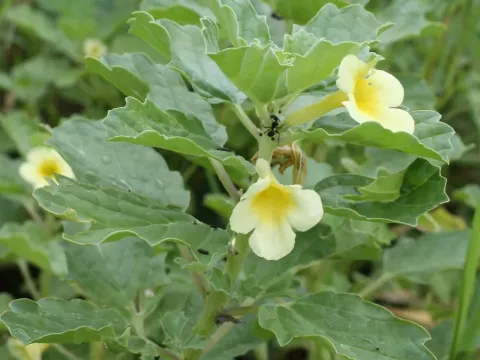
Botanically, it features fleshy, ovate leaves and small yellow flowers, followed by unique four-angled, prickly fruits. These fruits serve as the main source of bioactive compounds, making the plant a target for pharmacological research and small-scale cultivation.
The agricultural potential of Pedalium lies in its ability to grow in marginal soils where traditional crops fail. As a drought-resistant species, it is being studied for its role in sustainable farming systems and its high concentration of medicinal phytochemicals.
Sowing should take place at the onset of the monsoon season or when soil temperatures remain consistently high. Because the seeds are encased in a hardened, spiny capsule, scarification or presoaking in water can improve the germination rate significantly.
Optimal planting density is essential to allow air circulation between plants, preventing fungal issues. Seeds are typically sown in rows, ensuring the soil is sufficiently loose to accommodate the plant's taproot system during the early stages of development.
The most common threats to Pedalium health are soil-borne pathogens, specifically Rhizoctonia and Fusarium species, which thrive in poorly drained environments. These pathogens lead to stem decay and root necrosis, which are often irreversible.
Insect pests, including various species of beetles and aphids, may affect leaf development during the vegetative phase. Effective management involves maintaining soil health and using selective biological controls to keep pest populations below economic threshold levels.
The harvest cycle usually spans several months, with fruits being collected once they reach maturity and the capsule turns woody. Harvesting is manual, requiring careful handling due to the spiny, pyramid-shaped fruit structures.